What to Put in a Small Medkit…: Skill 18
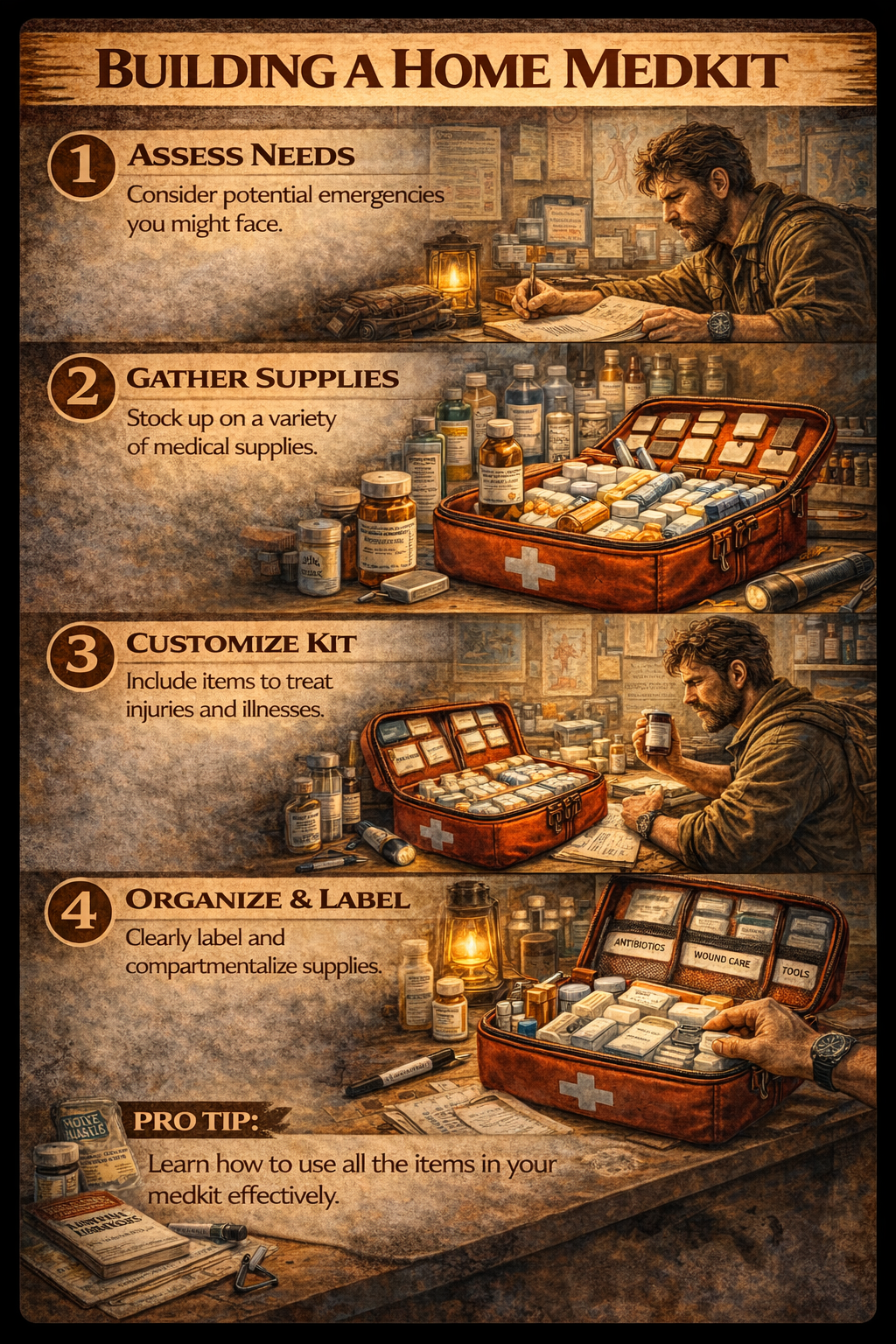
Medical Kits: Keep It Purpose-Driven
Don’t buy generic kits. Build your own to match the job.
1. Match the Kit to the Scenario
Car kit: Major trauma, accidents, full-size bag
Hiking kit: Bleeding, blisters, light meds, compact
Home kit: Long-term care, illness, prescriptions
2. Use a Tiered System
Small kit: On-body, stops bleeding fast
Medium kit: Backpack, deeper care
Large kit: Vehicle or home, full resupply
3. Think About Who You’re Treating
Kids = Band-Aids, fever meds
Adults = Trauma supplies, pain relief
Elderly = Prescriptions, monitoring tools
4. Pack for Real Risks
Build for likely injuries—driving, hiking, farming, etc.
Don’t overpack what you’ll never use
Bottom Line:
Pack smart. Keep it scenario-specific. Know how to use it.

if you don’t have time to make the perfect survival medkit don’t worry…
I did it for you see now to claim your medkit for a hug deal.(Click above)
Frequently Asked Questions:
-
Bandages, antiseptic, and pain relief basics come first.
-
Small kits are easier to carry consistently.
-
Yes, but prepared items work better.
-
Carrying items you do not know how to use.
-
Regularly for expired supplies.