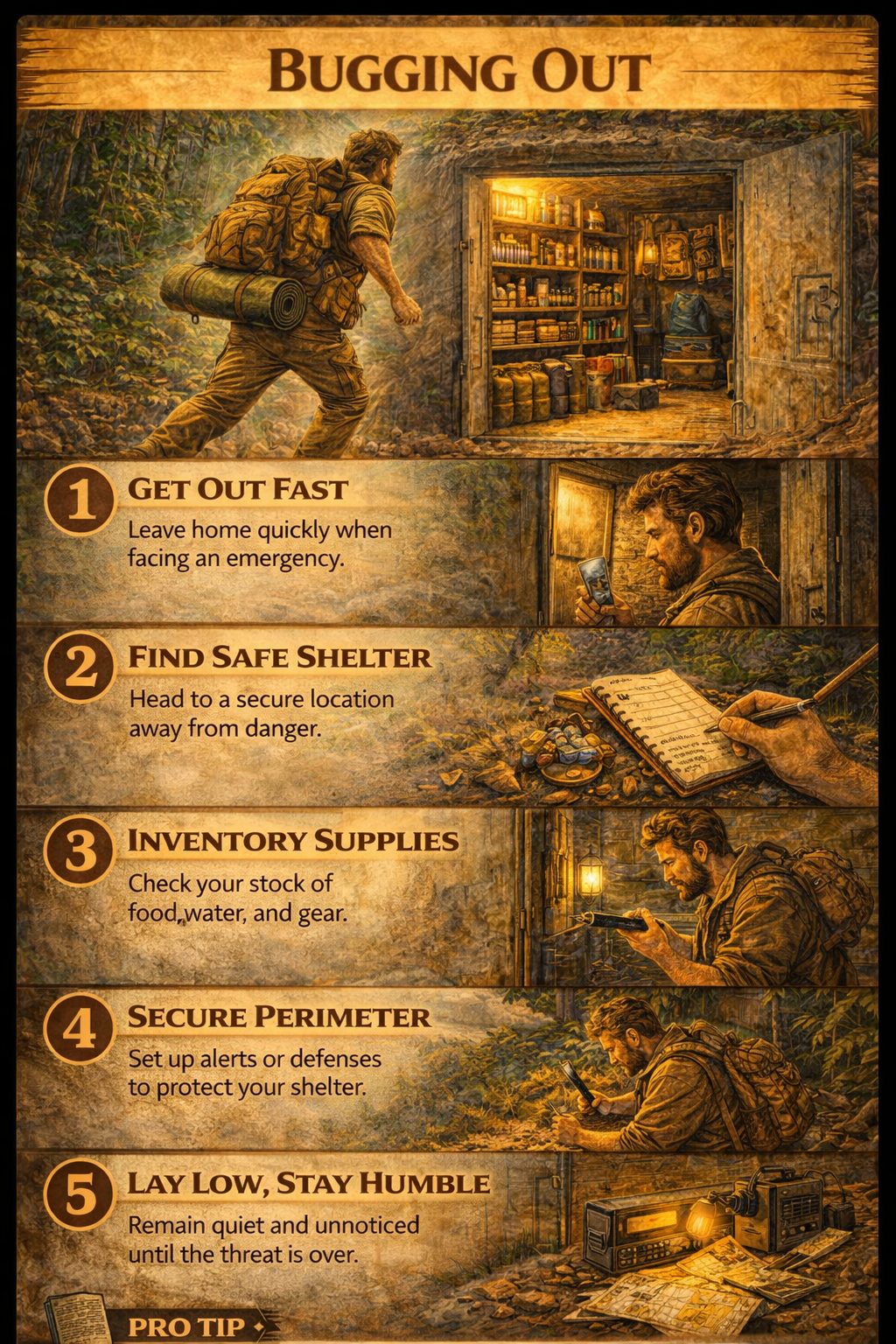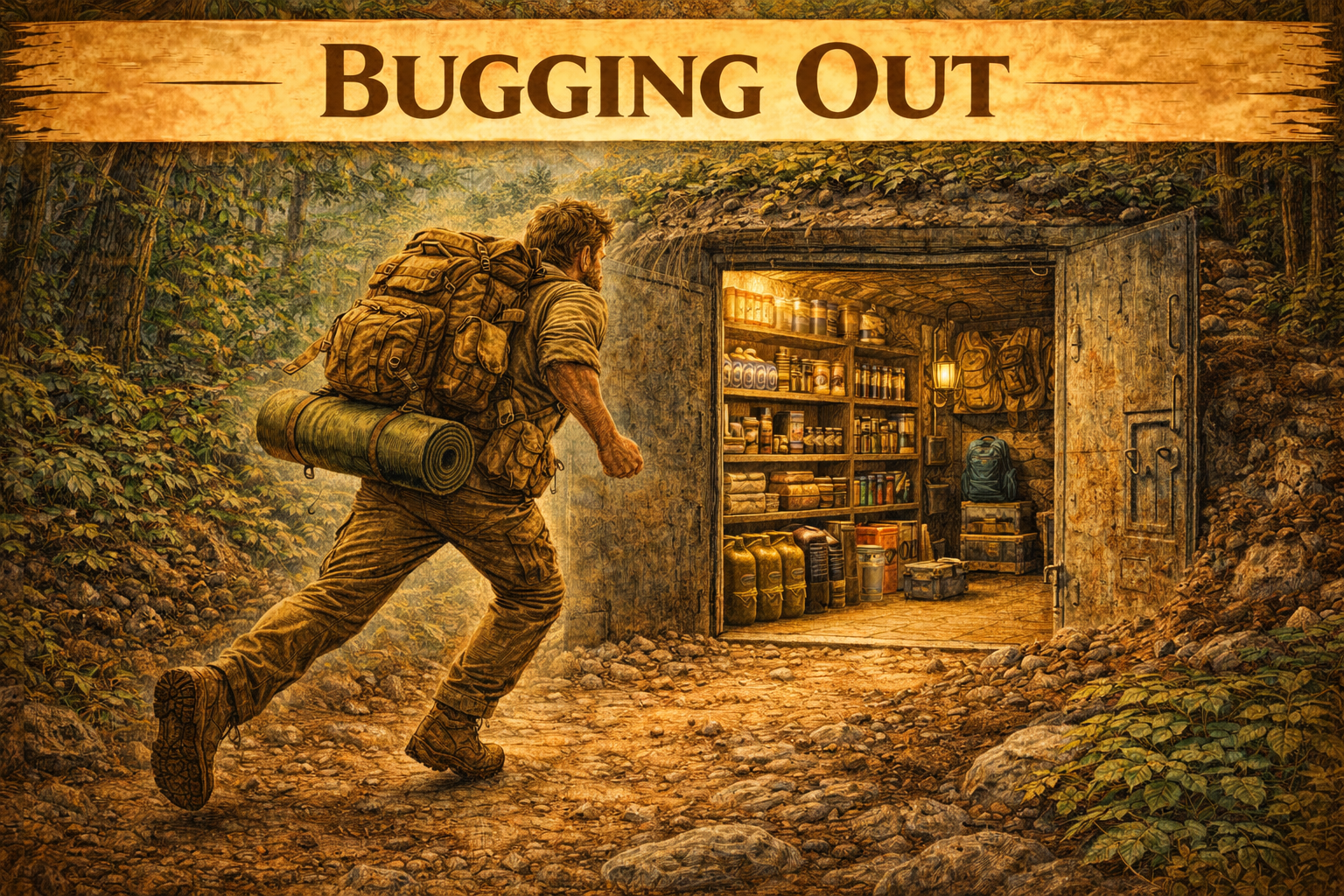
Bugging Out: To Do or Not to Do?
The debate around bugging out often stems from confusion—people use the same term to mean different things. So, first, define it.
In the military, a bug out bag (BOB) was built to sustain us until resupply—ammo, med gear, batteries, comms, food, water, and mission-critical info. That version isn't ideal for civilian life, but it's a solid foundation.
For civilian prepping, use reverse planning:
Start with the worst-case but still probable scenario in your area—natural or man-made—and build backward.
For example, in Utah, an earthquake would likely cut travel, comms, and access to credit. Prep with:
Overland-capable vehicle
Cash
Firearm and ammo
Alternative comms (SAT/hams)
Flexible shelter/stay-or-go plan
A worst-case man-made disaster (EMP, war, collapse) requires similar prep. You’ll need to decide: stay or go?
And if you’re going, leave early and be fully ready—no last-minute packing.
A civilian BOB should include:
Cash
Ammo
Med kit
Batteries
Laminated info (locations, contacts, passwords)
Physical road maps
Bottom line: Plan for the worst, and you’ll be ready for everything else.
how to bug out step by step

If your off grid you need this tactical flashlight (click above to see deal)
Frequently Asked Questions:
-
Leave when staying becomes unsafe.
-
Waiting too long limits routes.
-
Yes, travel creates risk.
-
Leaving without a clear destination.
-
Roads may become blocked.