How to Perform CPR: Skill 67
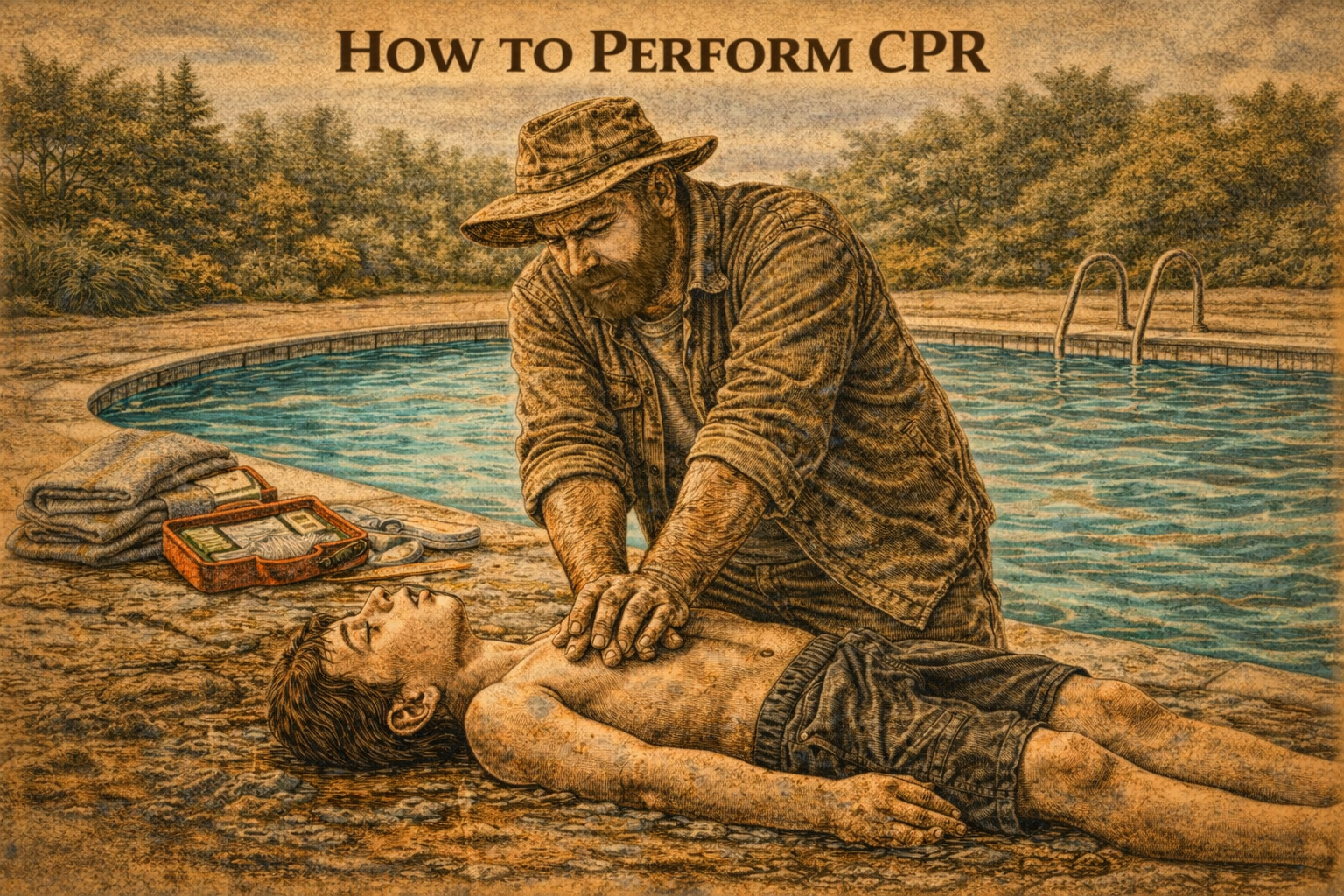
When someone drops in front of you and stops breathing, time collapses.
No sirens. No stretcher. No second try.
What you do in the next few minutes decides everything.
I’m going to break down exactly how to perform CPR. (In less than a 60 second read)
What It Does
Keeps oxygen moving to the brain
Buys time until help arrives
Prevents irreversible brain damage
Turns a “done deal” into a fighting chance
Works anywhere.
How to Do It (Field Method)
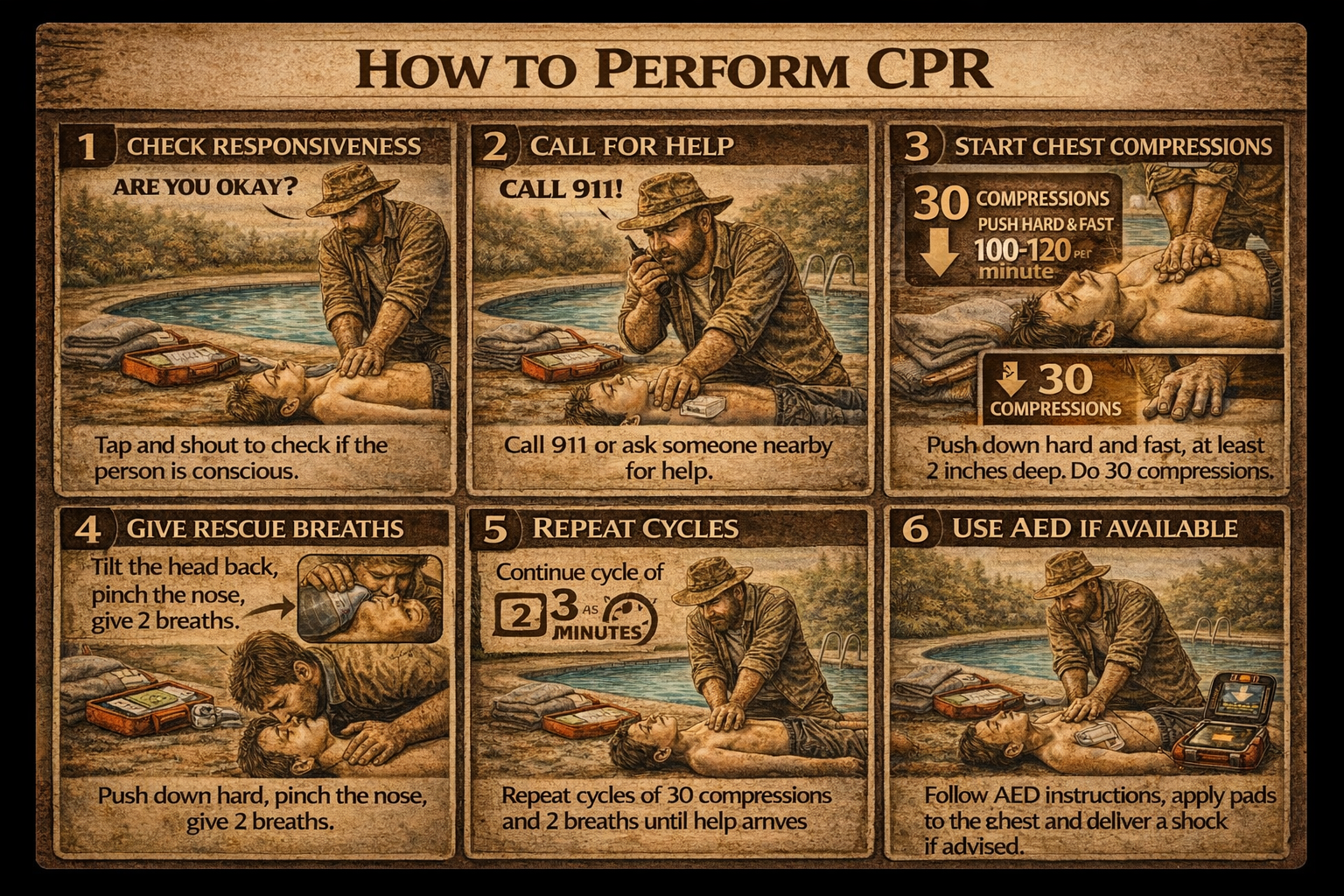
1. Check Responsiveness
Tap the person and shout. No response? Act immediately.
2. Call for Help (If Possible)
If anyone’s nearby, send them for help or a phone. If you’re alone start CPR now.
3. Check Breathing
Look for chest movement.
No normal breathing or only gasping? Begin CPR.
4. Position Hands
Place the heel of one hand in the center of the chest, between the nipples.
Other hand on top. Lock your elbows.
5. Start Compressions
Push hard and fast.
Depth: about 2 inches
Rate: 100–120 per minute
Let the chest fully rise between pushes.
6. Add Rescue Breaths (If You Can)
After 30 compressions, give 2 breaths.
Tilt the head back, lift the chin, seal the mouth, breathe until the chest rises.
If you can’t do breaths — keep compressing.
7. Don’t Stop
Continue until:
The person starts breathing
You’re relieved by someone else
You physically can’t continue
Stopping early kills momentum — and survival.
Tips
Hard and fast beats gentle and slow
Broken ribs are survivable brain death isn’t
If there’s an AED (Automated External Defibrillator), use it immediately
If the person is wet or on soft ground, move them to a firm surface if possible
Bottom Line
CPR isn’t about perfection.
It’s about action.
You don’t need permission.
You don’t need equipment.
You simply need the will to move when everyone else freezes.
Start compressions.
Buy time.
Give them a chance.

Frequently Asked Questions:
-
When breathing and pulse are absent.
-
Proper depth improves circulation.
-
Yes, chest compressions alone help.
-
Until help arrives or breathing returns.
-
Steady compressions improve effectiveness.