How to Spot Infections: Skill 74
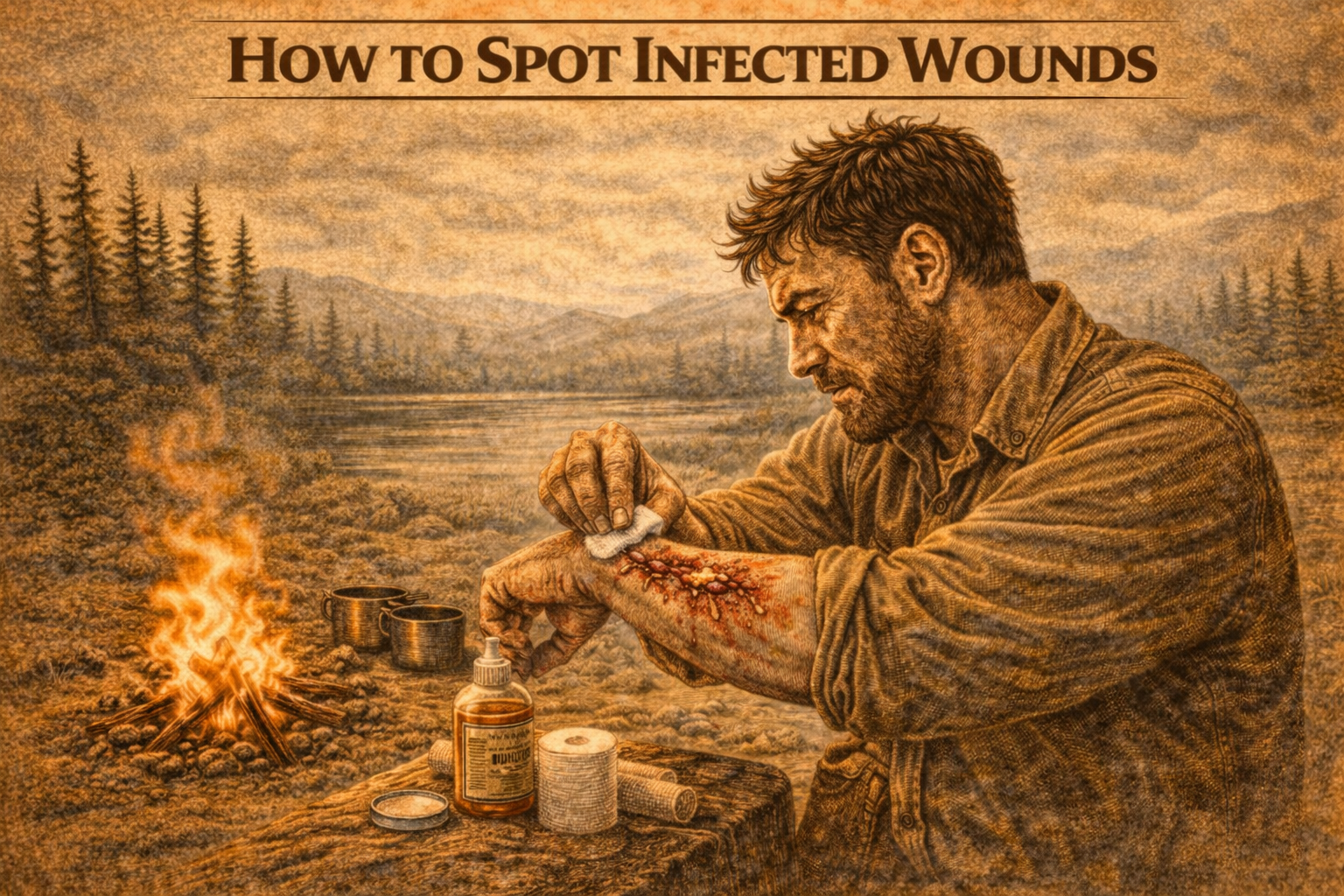
A cut isn’t what ends people.
What happens three days later is.
Infection is quiet at first.
Then it spreads.
Then it decides the outcome.
If you know what to look for early, you stay ahead of it.
If you miss the warning signs, your body starts losing ground.
What Infection Really Is
When bacteria get inside a wound, your body fights back.
Redness.
Swelling.
Heat.
Pain.
Some of that is normal.
The danger begins when those signals escalate instead of settle.
Early Warning Signs (Monitor Closely)
These mean infection may be starting — not fatal yet, but moving.
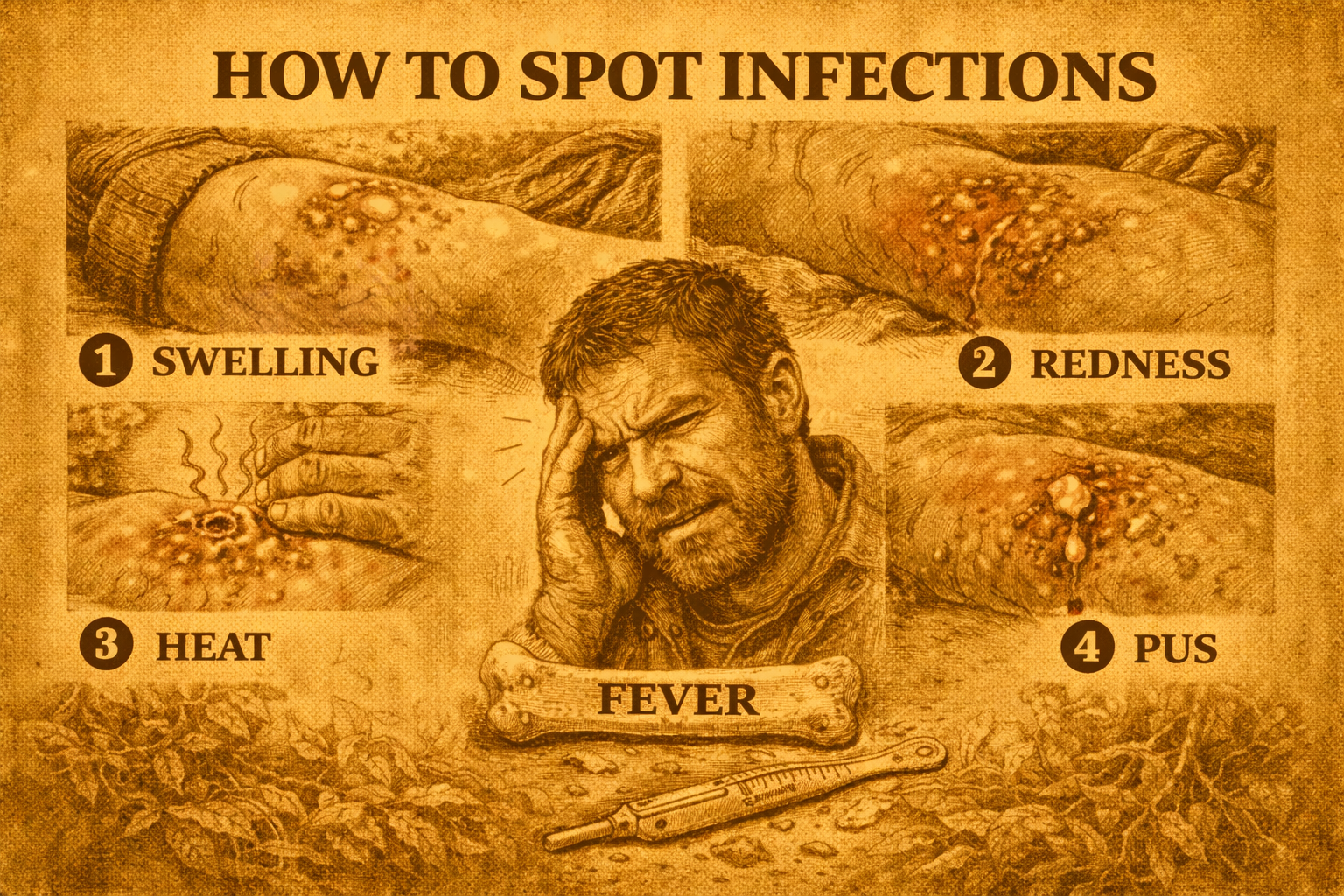
• Increasing redness around the wound
• Swelling that’s growing instead of shrinking
• Warmth when you touch the area
• Pus or cloudy drainage
• Worsening pain after the first 24–48 hours
A healthy wound improves daily.
An infected one gets louder.
Dangerous Signs (Act Immediately)
These mean the infection is spreading beyond the wound.
• Red streaks moving away from the injury
• Fever or chills
• Rapid heartbeat
• Swollen lymph nodes
• Extreme tenderness
• Foul smell
• Skin turning dark, purple, or black
Red streaks are especially serious — that’s infection moving through the lymphatic system.
At this stage, it’s no longer “a bad cut.”
It’s systemic.
The Most Dangerous Types to Recognize
Cellulitis:
Spreading redness that expands quickly. Skin looks tight and hot.
Abscess:
Painful, swollen pocket filled with pus. Often feels soft in the center.
Sepsis:
Confusion, high fever, fast breathing, weakness. This is life-threatening and escalates fast.
Necrotizing Infection (Rare but Severe):
Pain far worse than the wound looks. Rapid swelling. Dark discoloration. This is an emergency.
The Core Rule
If symptoms are spreading outward, the infection is winning.
If symptoms are shrinking daily, your body is winning.
Track it.
Mark redness with a pen if needed.
Check twice a day.
In survival situations, observation is medicine.
Bottom Line
You don’t just treat wounds.
You monitor them.
Clean early.
Watch daily.
Act fast if it spreads.
Most infections give warning.
The key is recognizing when it stops being “normal healing”
and starts becoming a threat.

Frequently Asked Questions:
-
Redness, swelling, heat, and pain often appear first.
-
Untreated infection can spread quickly without medical help.
-
Dirty cuts and punctures carry higher risk.
-
At least daily in field conditions.
-
Yes, early infection may begin mildly.