How to Skin Small Animals: Skill 75
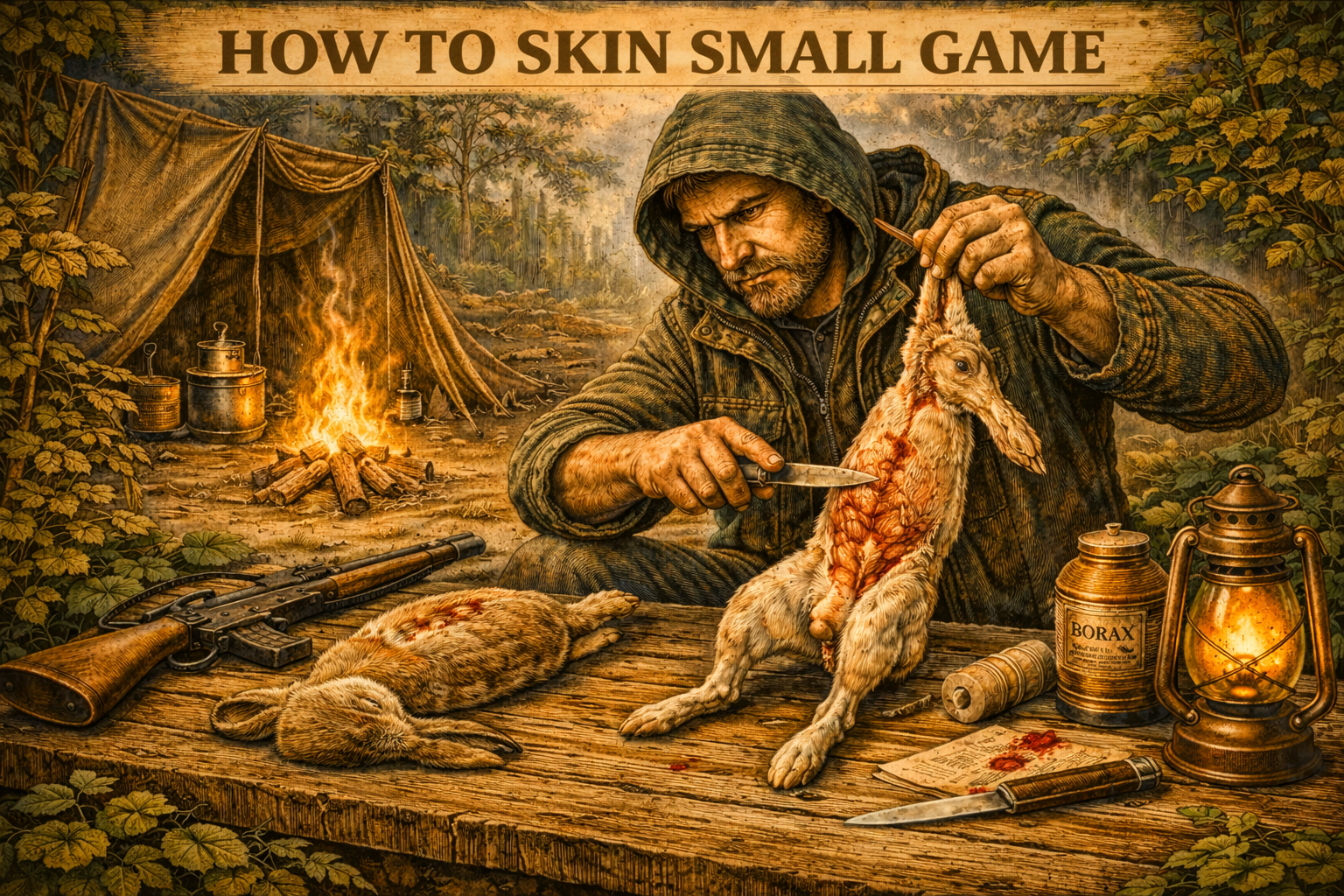
Catching food is only half the job.
If you can’t process it cleanly,
you waste meat, contaminate it,
or lose calories you fought hard to earn.
Skinning small game isn’t about speed.
It’s about precision and control.
What It Does
• Preserves usable meat
• Prevents contamination
• Protects organs for optional use
• Maximizes calories from one animal
• Keeps tools and hands cleaner
Food loss in survival isn’t hunger.
It’s poor processing.
The Core Rule
Cut shallow.
Pull steady.
Keep meat clean.
If the blade goes too deep, you lose quality fast.
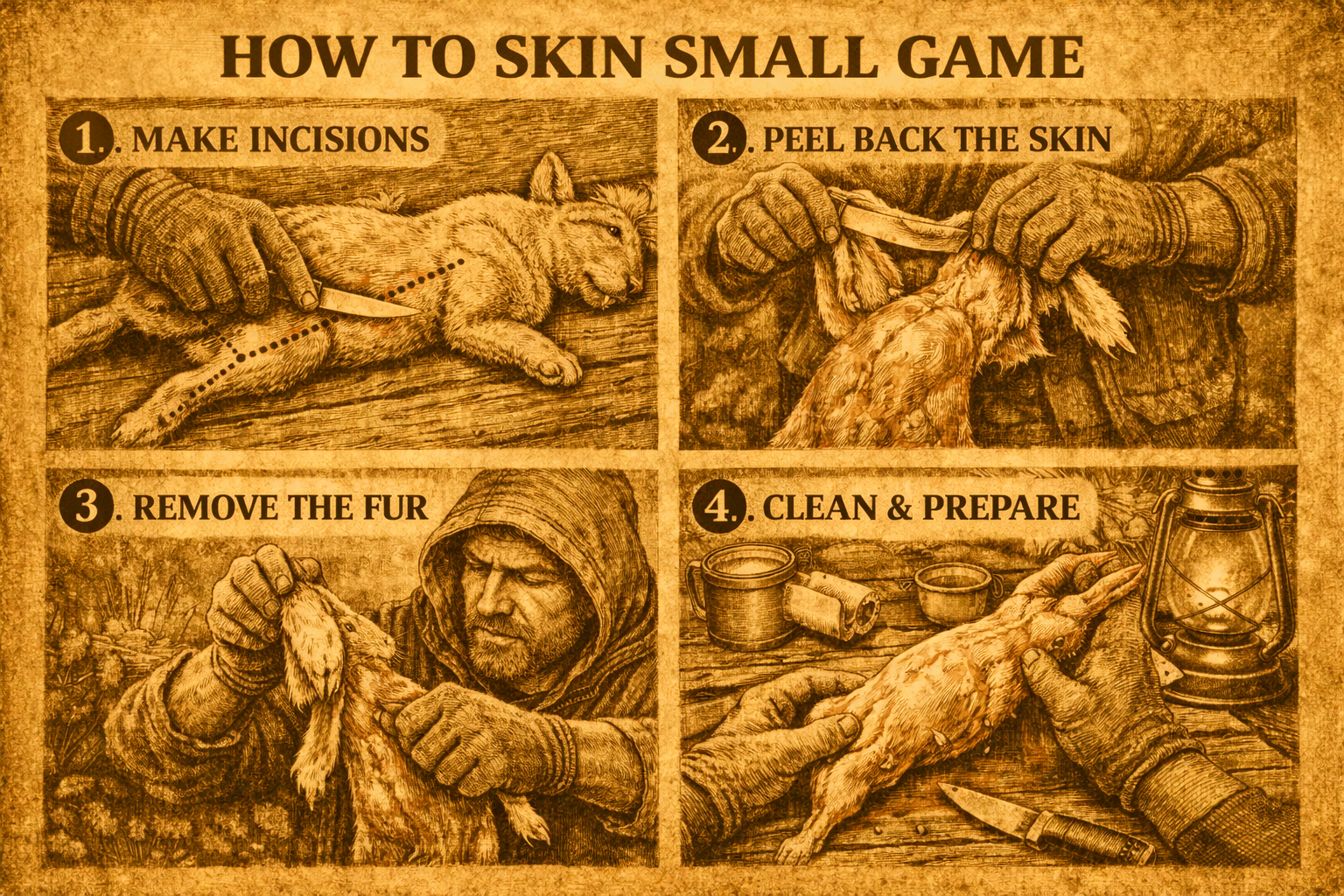
Skinning Small Game (Field Method)
1. Confirm the animal is safe to handle
No movement.
No reflex kicks.
Approach carefully and verify before touching.
2. Position the animal properly
Lay it on its back.
Stretch the legs outward.
Control prevents mistakes.
3. Make a shallow incision
Start at the base of the tail and cut toward the belly.
Blade up, edge just under the skin.
You’re separating skin from muscle — not opening the body cavity.
Deep cuts puncture organs.
That ruins meat.
4. Separate hide from meat
Use your fingers more than your knife.
Pull gently while slicing connective tissue.
The hide should peel back steadily.
Let tension do most of the work.
5. Remove the hide fully
Work down toward the head and legs.
Small careful cuts around joints help free tight spots.
Stay patient.
Rushing creates waste.
6. Open the body cavity carefully
Small cut below the rib cage.
Two fingers inside to lift skin and protect organs.
Cut away from yourself and shallow.
Avoid puncturing intestines at all costs.
7. Remove internal organs
Pull downward and outward.
Keep the cavity clean.
If something ruptures, rinse immediately if possible.
Tips
• Keep hair away from exposed meat
• Hang the animal if possible — gravity helps
• Use a sharp blade — dull knives tear
• Cool meat quickly after processing
Bottom Line
Small game is survival currency.
Skin it clean.
Process it carefully.
Protect every calorie.
Food is hard to earn in the wild.
Don’t lose it in the final step.

Frequently Asked Questions:
-
Start with shallow cuts and separate the hide carefully from the body.
-
Deep cuts can damage meat and organs.
-
A sharp knife gives cleaner control.
-
Yes, but it takes more time and precision.
-
It helps preserve food and use animal resources fully.