Flood Survival Basics: Skill 69
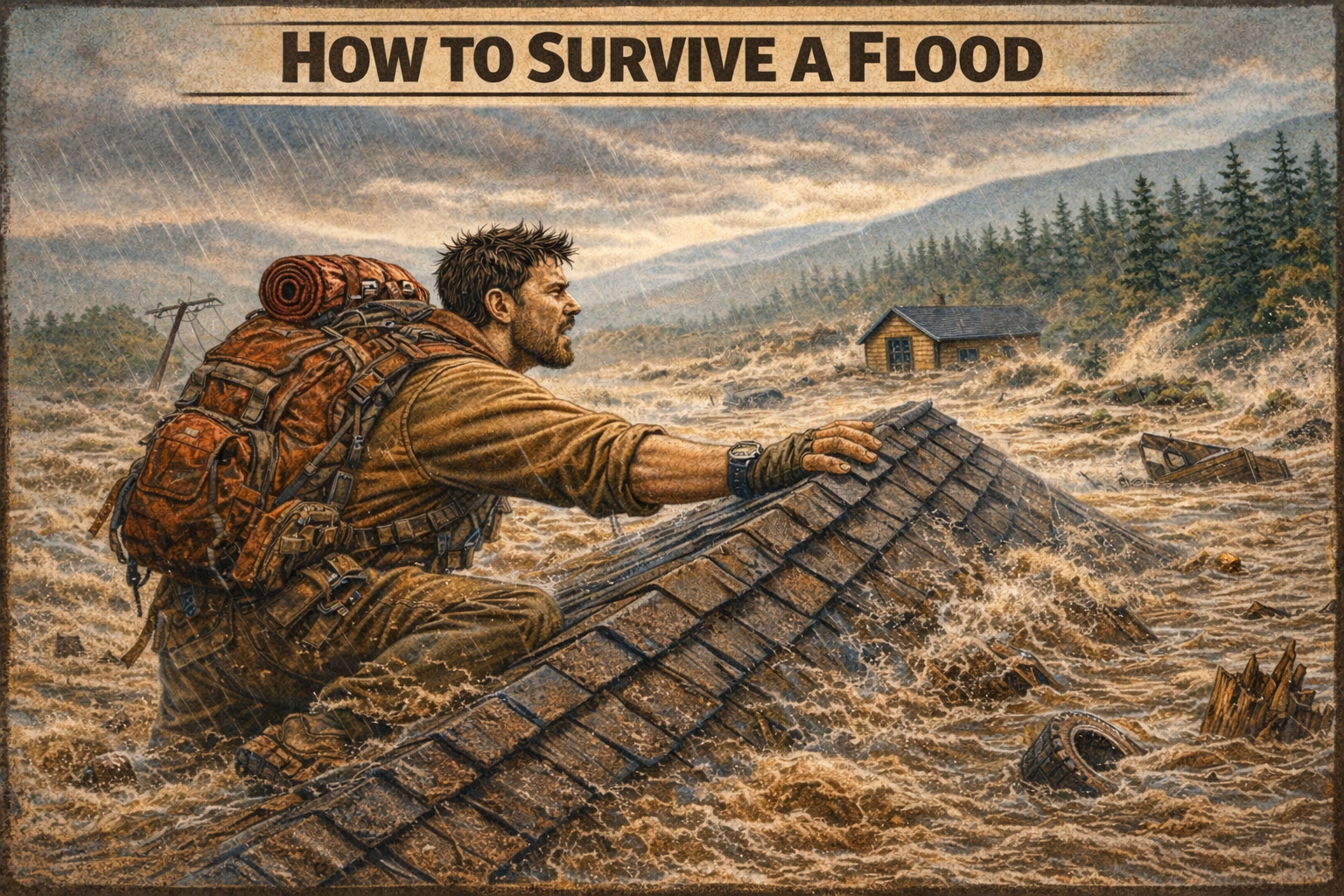
Floods don’t feel dangerous at first.
They feel slow.
Manageable.
Temporary.
That’s why they kill.
Water doesn’t need speed to win — it needs depth, pressure, and time.
Here’s how to survive a flood and stay functional while others panic.
What It Does
• Keeps you from being swept or trapped
• Prevents cold shock and exhaustion
• Protects mobility and decision-making
• Buys time until water recedes
• Turns chaos into controlled movement
Flood survival is about position and patience.
The Core Rule
Never fight moving water.
Never trust still water.
You survive floods by:
• staying upright
• staying dry when possible
• staying ahead of the rise
Flood Survival Basics (Field Method)
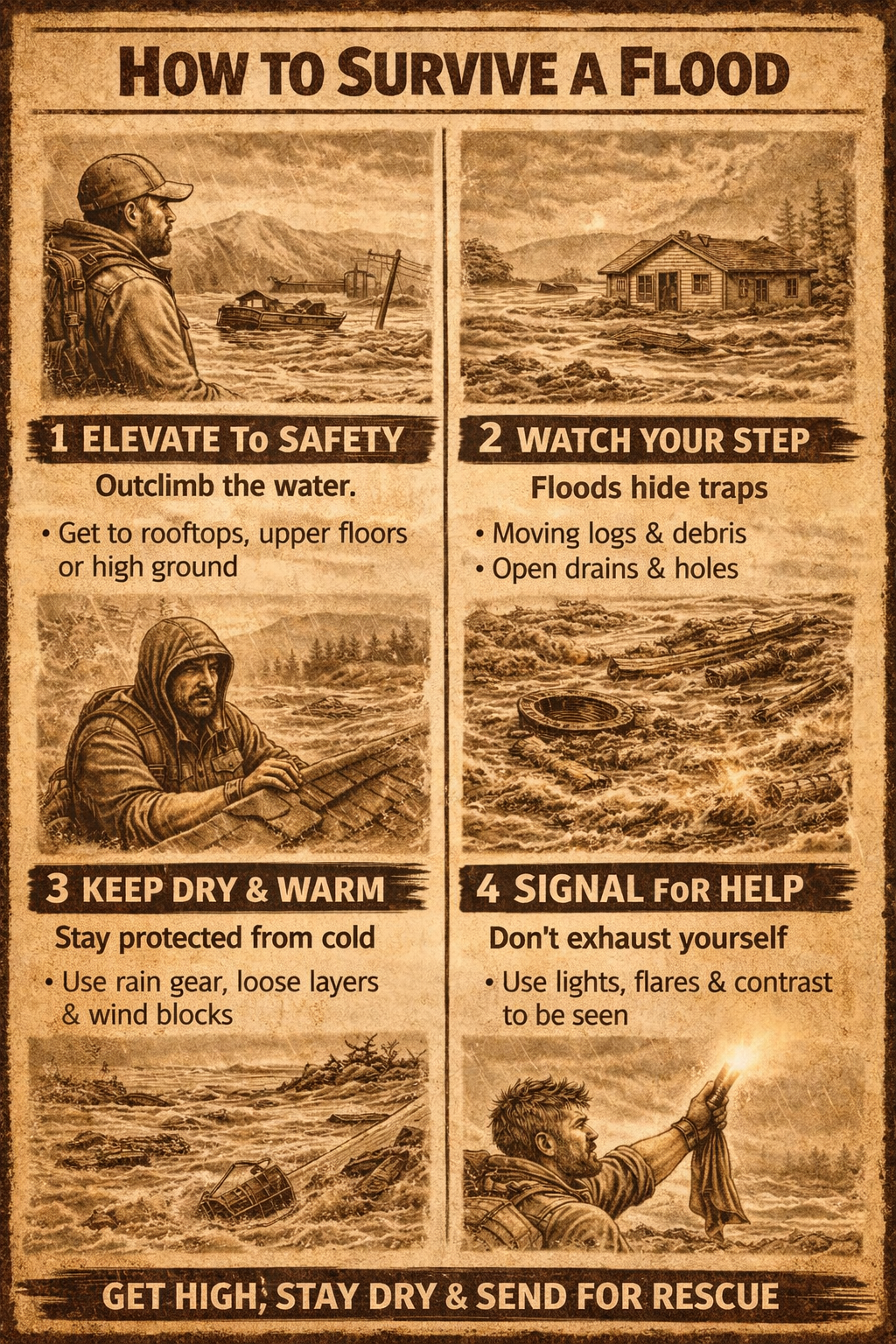
1. Elevation beats speed
Don’t outrun water.
Outclimb it.
Move to:
• upper floors
• rooftops
• high ground
Basements become traps fast.
2. Water hides danger
You can’t see:
• open drains
• debris
• missing ground
Six inches can knock you down.
One foot can move a car.
If you can’t see your footing — stop.
3. Stay dry, stay warm
Floodwater pulls heat fast.
Wet clothing = rapid fatigue.
Use:
• loose outer layers
• water-shedding covers
• wind blocks
Cold kills focus before it kills the body.
4. Move only when it helps
Constant movement wastes energy.
Once positioned safely:
• conserve heat
• conserve calories
• observe water behavior
Floods rise fast — and fall slower.
5. Signal, don’t shout
Sound gets swallowed by rain and wind.
Visibility wins:
• light
• contrast
• motion
Make yourself easy to find without exhausting yourself.
Tips
• Never enter moving water for gear
• Avoid bridges — pressure builds there
• Watch debris flow to read current direction
• Floodwater is contaminated — avoid contact
Bottom Line
Flood survival isn’t strength.
It’s discipline.
Climb early.
Move deliberately.
Wait intelligently.
Water always wins against force.
You win with position.

Frequently Asked Questions:
-
Even shallow current can sweep people away.
-
Reach higher ground immediately.
-
Usually no because depth is deceptive.
-
Hidden hazards and contamination are common.
-
Only after water fully recedes.