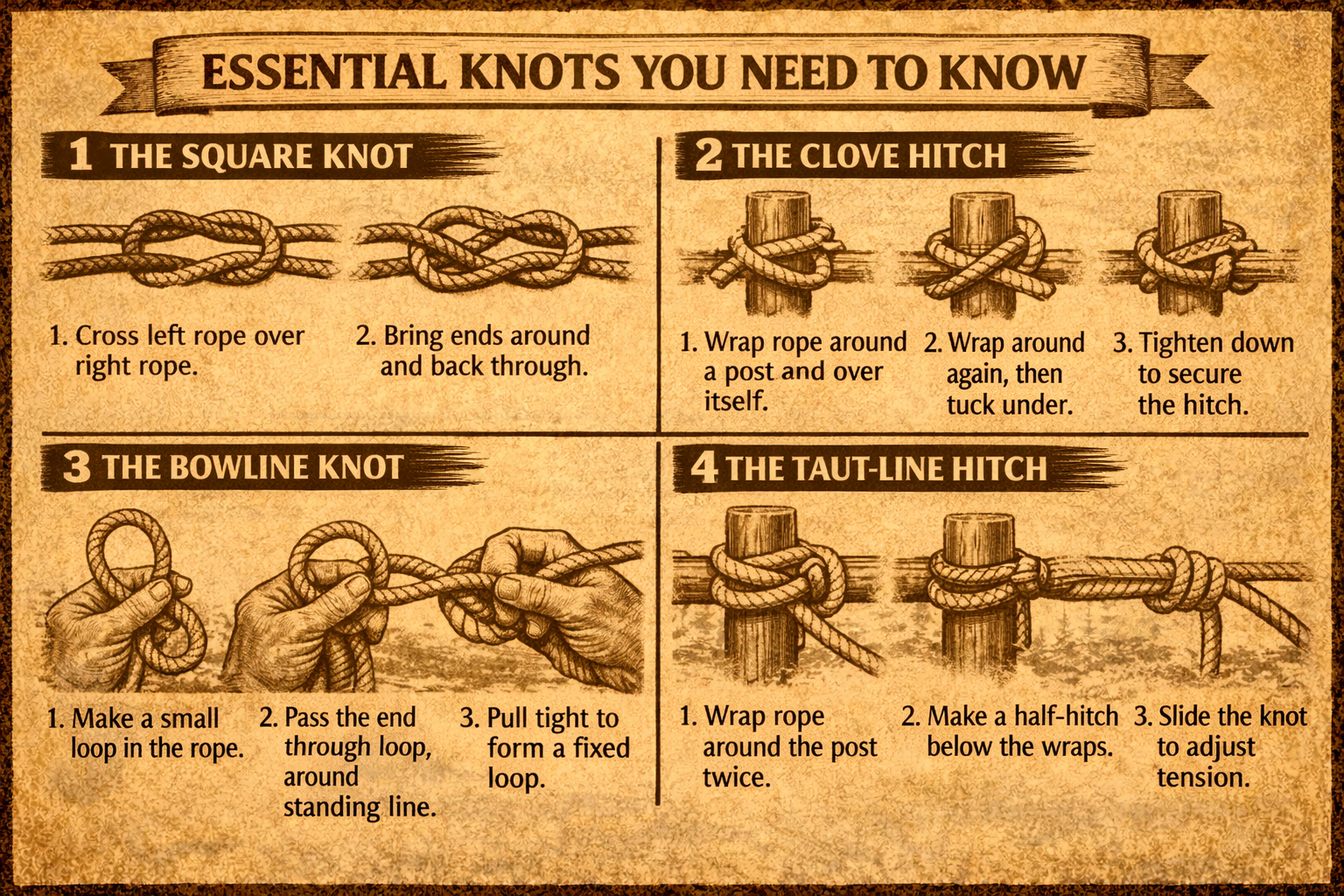
How to Tie Any Knot: Skill 71
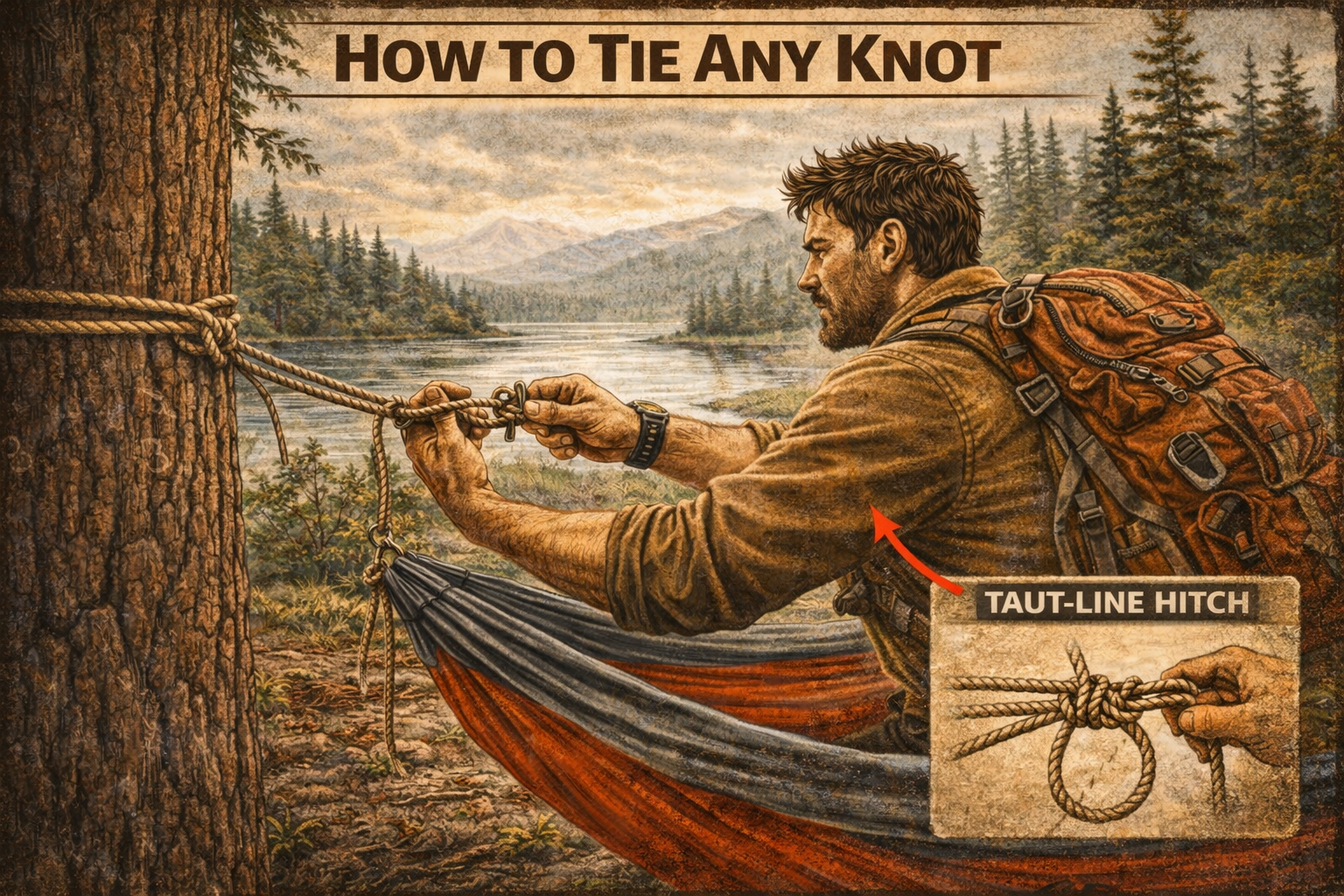
Knots decide outcomes.
Gear fails.
Hands slip.
Weather turns.
A knot doesn’t care.
It holds — or it doesn’t.
Survival knots aren’t about memorizing dozens of patterns.
They’re about control, load, and intent.
What It Does
• Secures gear under tension
• Prevents slippage and failure
• Allows fast release when needed
• Adapts to rope, cord, wire, or fabric
• Turns chaos into controlled force
Knots are leverage you carry in your hands.
The Core Rule
Purpose beats complexity.
Tension beats decoration.
If you don’t know what the knot needs to do, you’ll tie the wrong one.
Every knot answers one question:
• Do I need it to hold?
• Do I need it to slide?
• Do I need it to release fast?
Answer that — then tie.
Knot Fundamentals (Field Method)
1. Anchor before you tighten
A knot is useless without a solid anchor.
Trees.
Posts.
Rocks.
Your own body weight.
Bad anchor = perfect knot failure.
2. Load direction matters
Knots behave differently under pull.
Straight pull = stable
Side load = failure risk
Always align the knot with the expected force.
3. Dress the knot
Sloppy knots slip.
Lay strands flat.
Remove twists.
Seat everything before loading.
A dressed knot is a strong knot.
4. Set it hard
Pull tight before you trust it.
If it moves now, it will fail later.
5. Plan the release
Some knots are permanent.
Some are meant to dump instantly.
Never tie yourself into a problem you can’t escape.
Tips
• Wet cord tightens — dry cord loosens
• Thicker rope needs fewer wraps
• Cold hands mean simple knots only
• If it looks complicated under stress, it will fail
Bottom Line
Knots aren’t tricks.
They’re decisions made permanent.
Tie with purpose.
Load with intent.
Release when it’s time.
Control the rope —
and you control the outcome.

Frequently Asked Questions:
-
The bowline is widely trusted.
-
Different tasks need different holding strength.
-
Loose dressing reduces strength.
-
Yes, if fibers are strong enough.
-
Frequently under load.