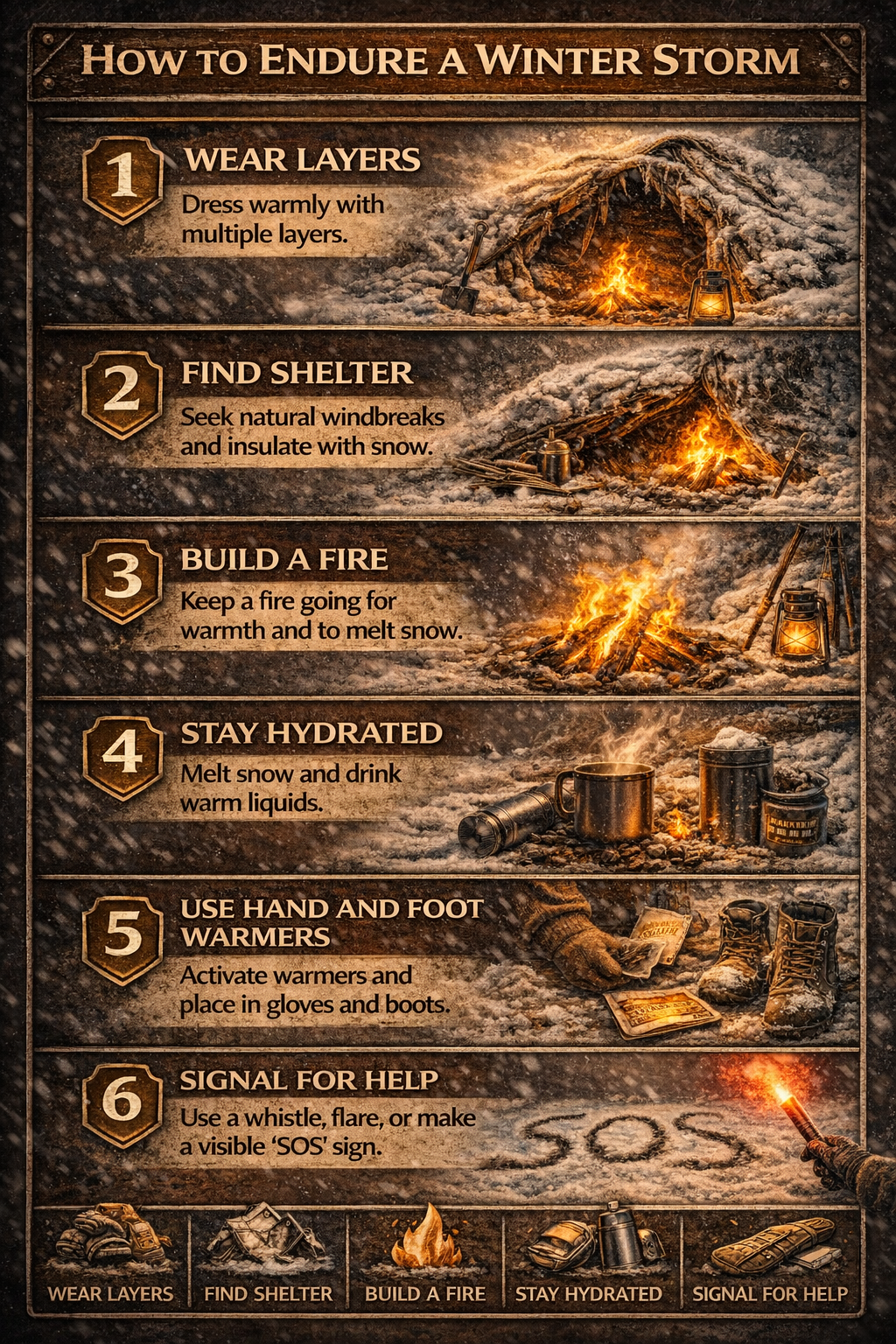
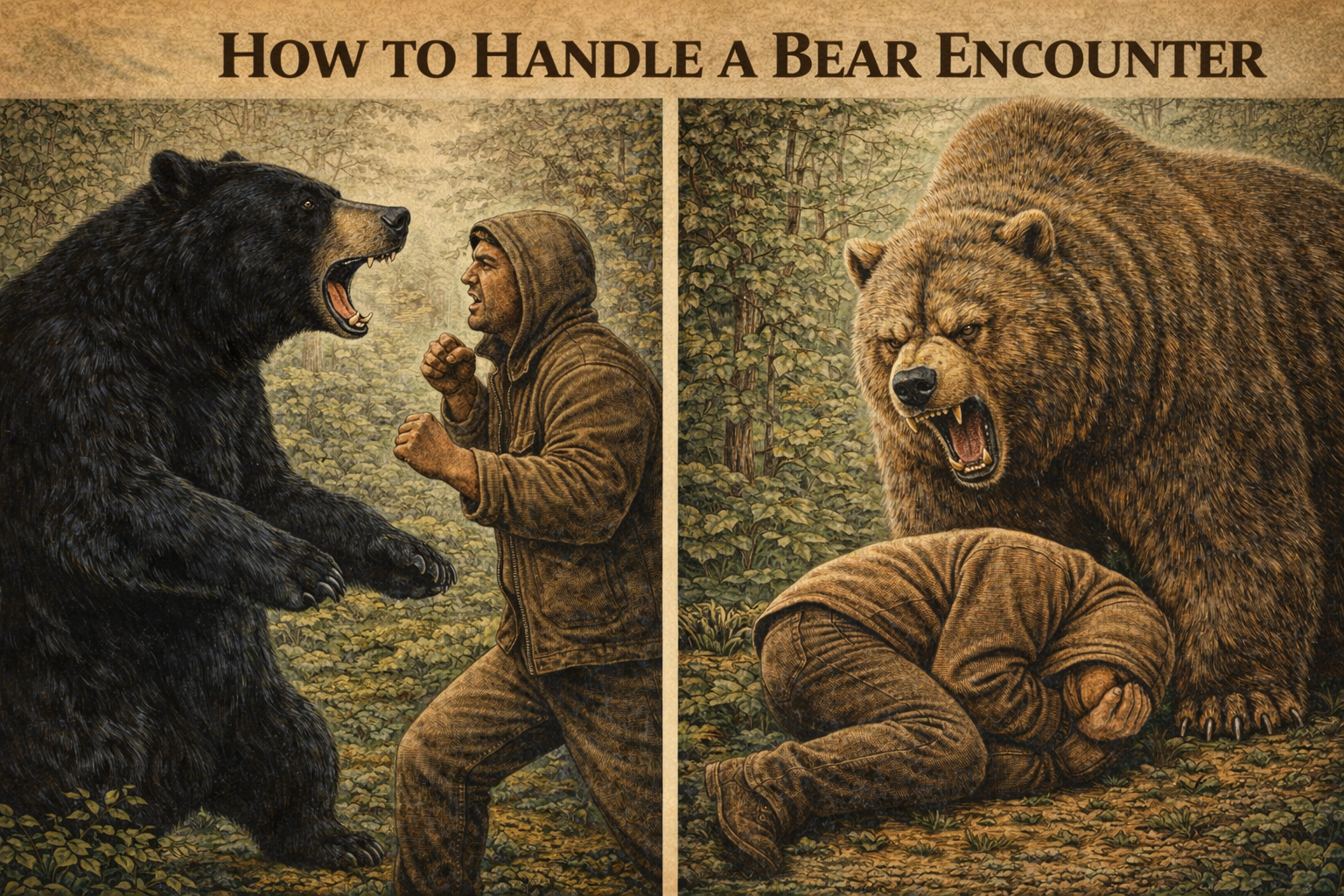
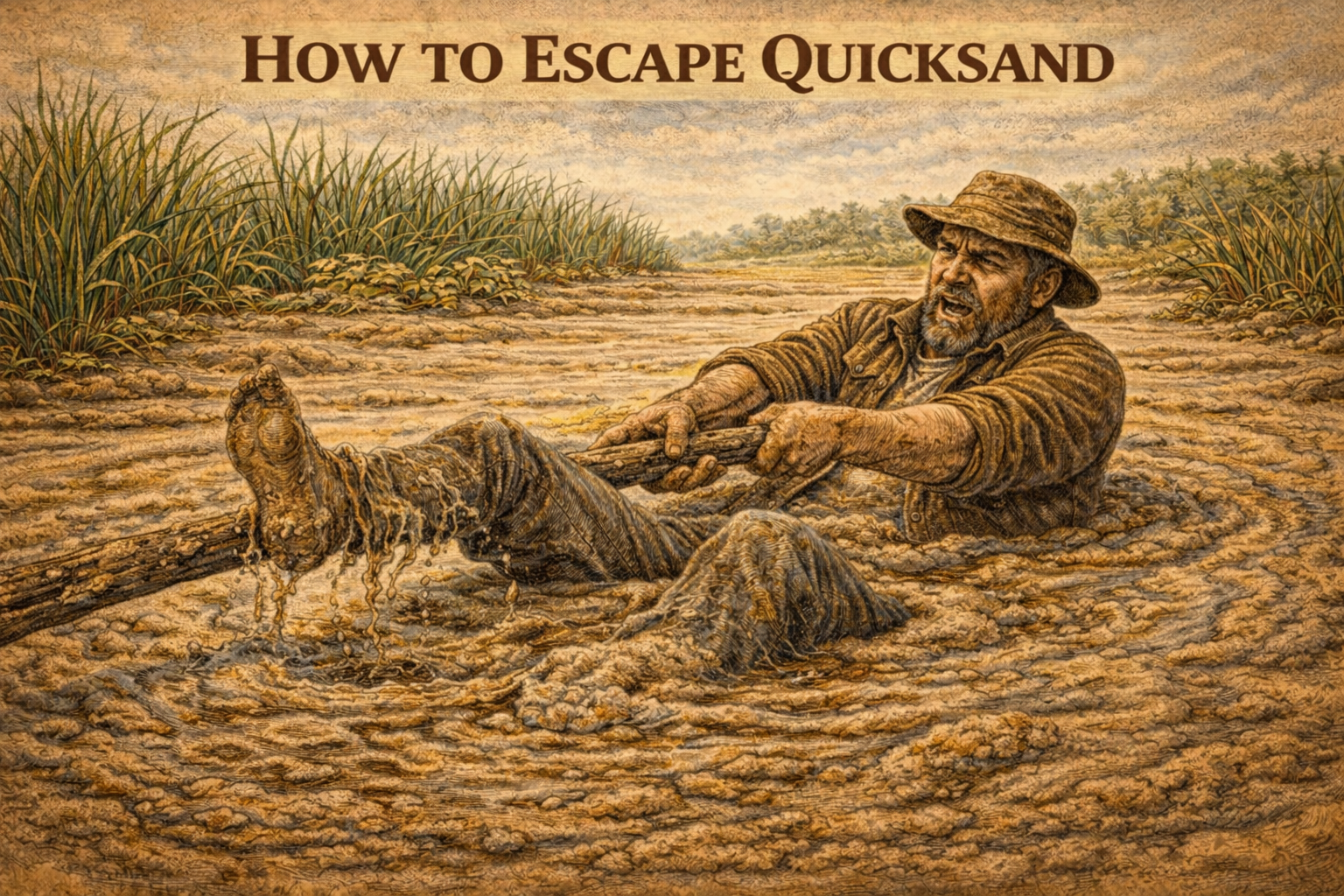
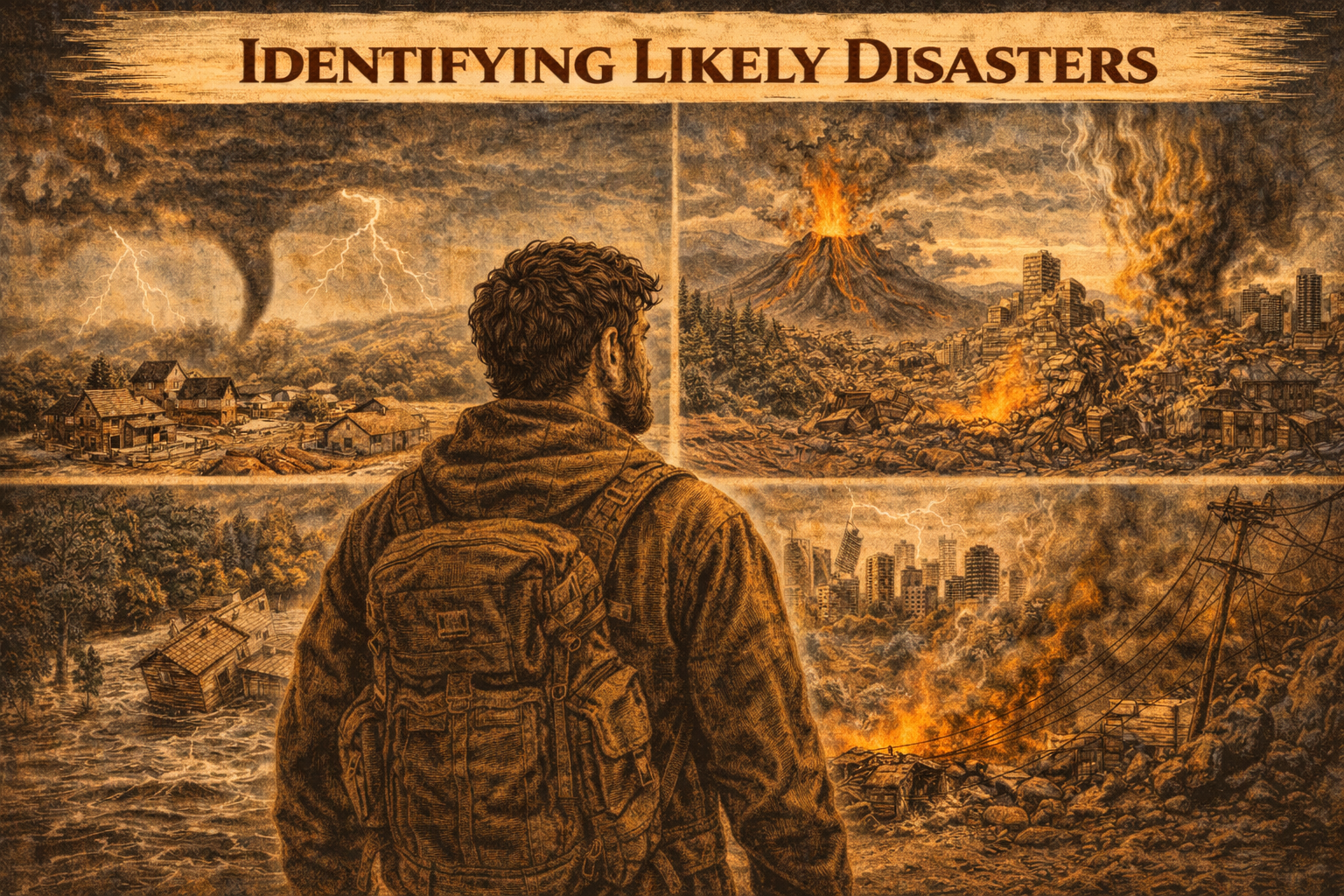
How to Endure a Winter Storm..: Skill 25
How to Dress for Winter
It’s not just about layers—it’s about insulation, moisture, and movement.
The Problem with “Dress in Layers”
People say "layer up,"
but six t-shirts won’t keep you warm—
one chunky wool sweater might.
What you really need is thickness, not layer count.
there are Two Types of Cold: Wet vs. Dry
1. Wet Cold
(32–45°F)
Miserable because moisture pulls heat from your body
Getting wet = getting cold, fast
Materials to use:
Wool or synthetics next to skin
Waterproof outer layer
No cotton
2. Dry Cold
(Below 0°F)
Cold, but easier to manage
Moisture can escape without soaking you
Frost builds outside your clothing
Materials to use:
Wool base and insulation
Cotton outer shell OK (for venting)
Big, breathable garments like anoraks
Fit Matters More Than You Think
Tight gloves and boots = cold hands and feet
Leave room for air and extra insulation
In wet cold: Waterproof boots
In dry cold: Loose, thick boots and wool socks
Quick Winter Clothing Strategy
Base layer: Wool or synthetic (keeps skin dry)
Mid layer: Insulation
Outer layer:
Wet cold: Waterproof
Dry cold: Wind-resistant, venting shell
Head, hands, feet: Cover fully, loosely, and in layers
Always bring more than you think you’ll need
Bottom Line
Think in thickness and insulation, not number of layers
Wet = waterproof; dry = breathable
Wool is always a win
Keep your clothes loose, dry, and adaptable
You can take it off if you’re hot—but you can’t put on what you didn’t bring

Frequently Asked Questions:
-
Preserve heat and shelter first.
-
Conditions can worsen rapidly.
-
Yes, cold reduces thirst awareness.
-
Poor insulation around openings.
-
Wet clothing loses warmth fast.