How to Make a Jungle Tripod: Skill 15
How to Build a Jungle Tripod
Most people think of tripods as camera gear or aluminum frames.
But in the jungle, a tripod is a critical primitive tool—for cooking, hanging gear, smoking meat, or even building shelters.
And the best part? You only need what's already around you.
What You Need
Three strong, straight poles (6–8 feet long)
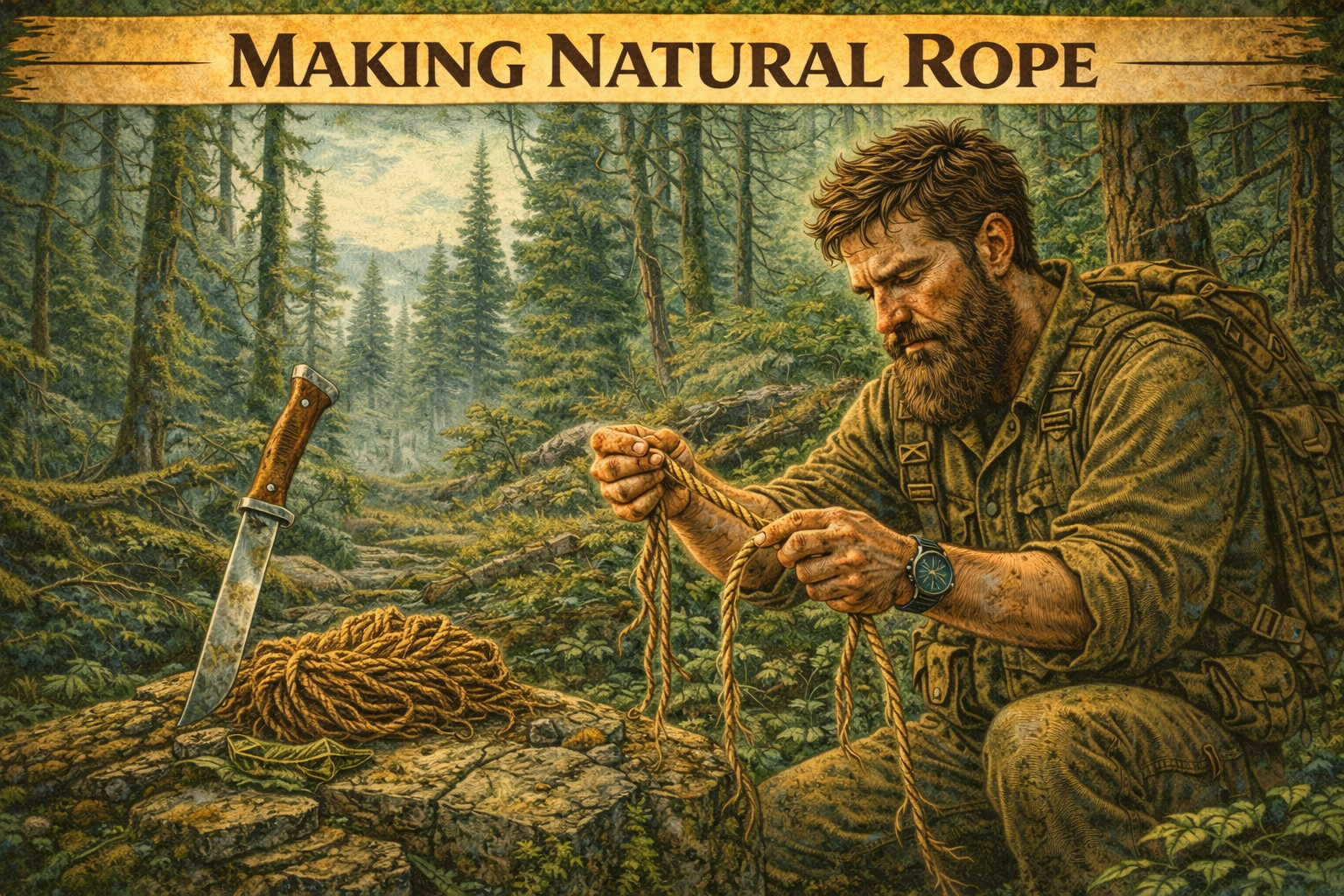
Cordage—natural vine, paracord, or inner strands of 550 cord
A knife or cutting tool
That’s it. Nothing fancy. Just simple tools and jungle resources.
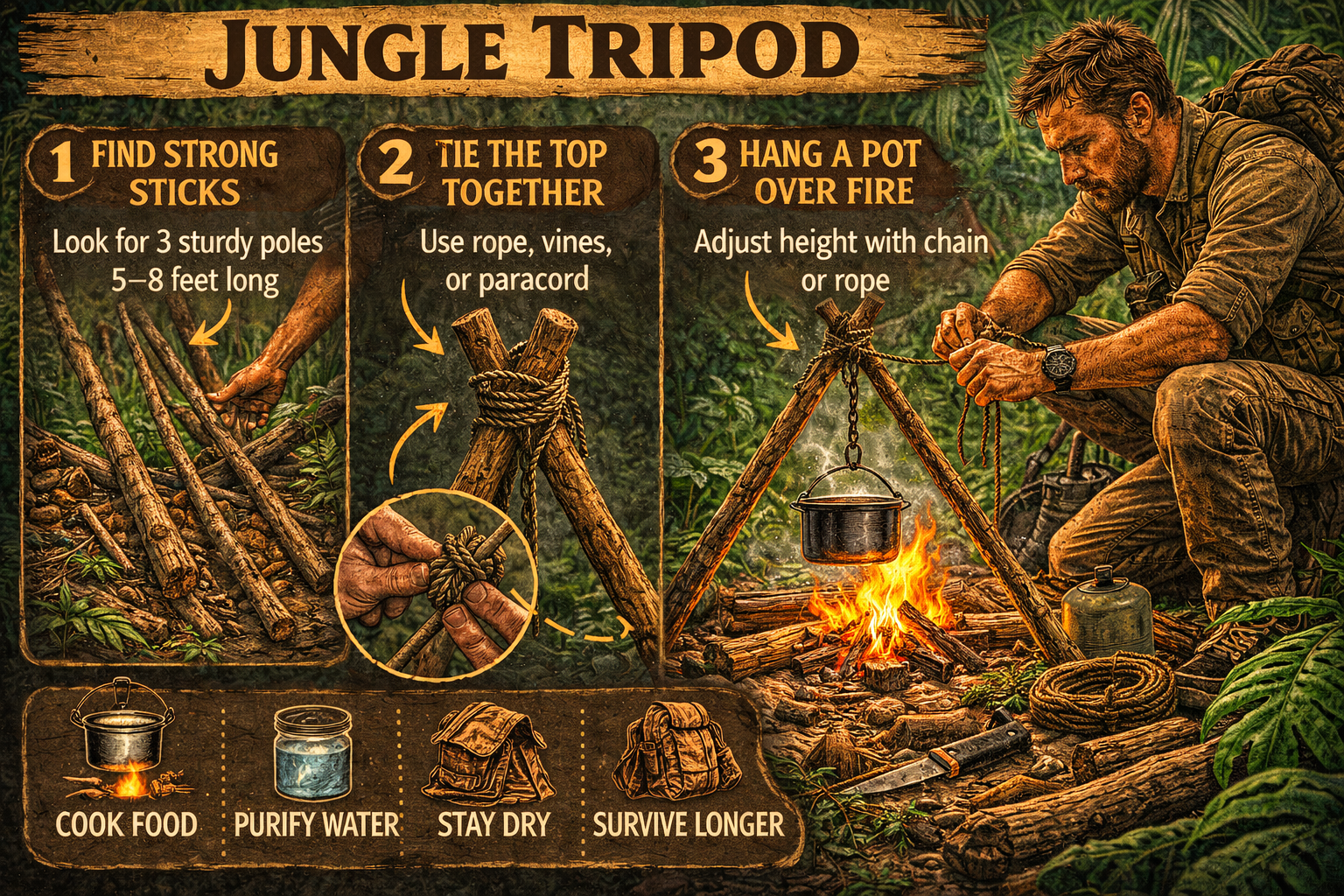
Step-by-Step: Lashing a Jungle Tripod
1. Prepare the poles
Look for hardwood saplings about wrist-thick
Trim off branches and bark for smoother handling
2. Set up the lash
Lay the poles side-by-side
Use a tripod lashing (wrap the cord around all three poles several times, then frap between the poles to tighten)
3. Stand it up
Spread the legs evenly to form a stable triangle
Adjust the lash if it feels loose or off-balance
4. Add function
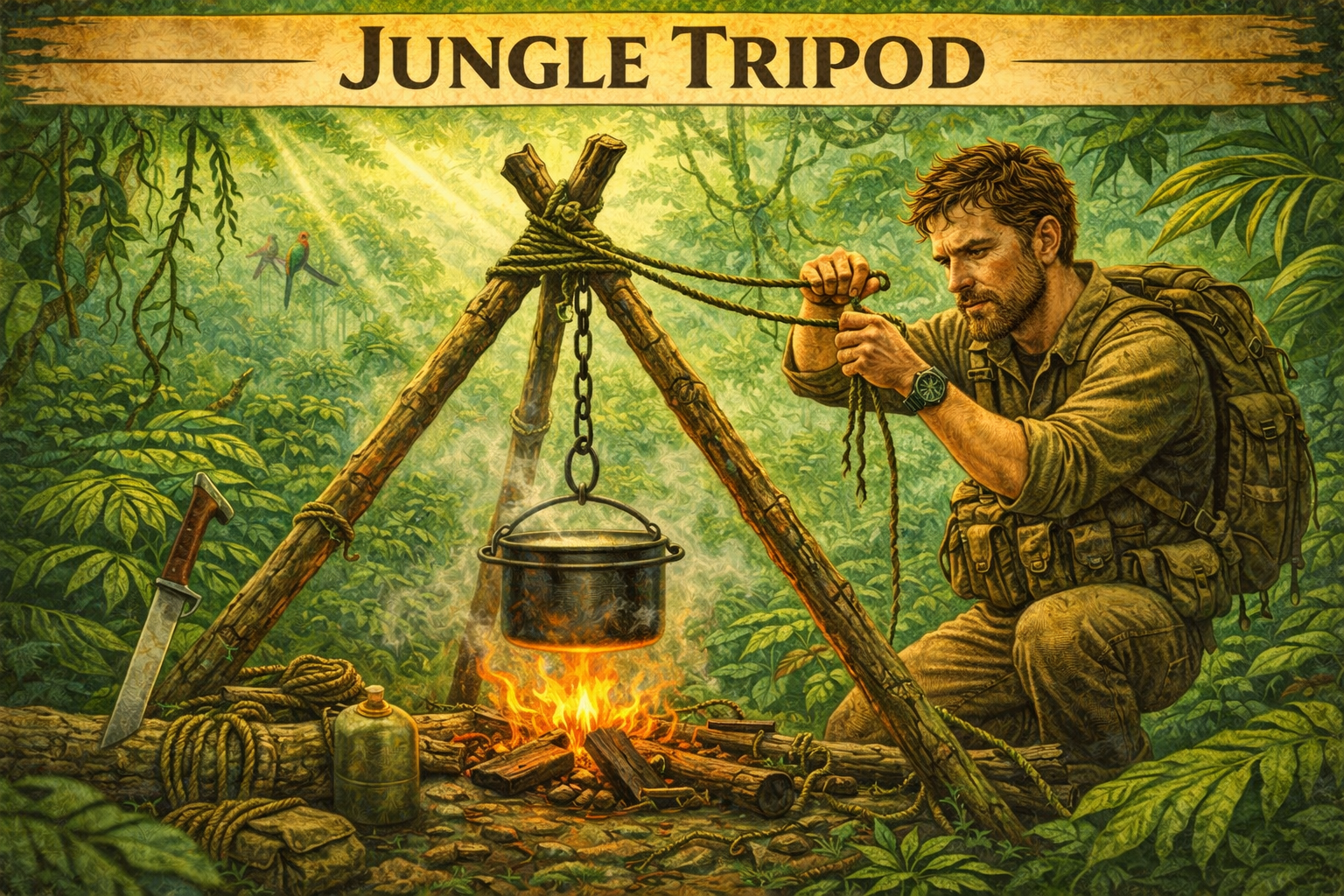
Tie a crossbar or hang a pot from the center
Use it to support a raised bed, cooking setup, or dry rack
Why It Matters
In the jungle, a tripod is a multi-use survival structure.
You can build it fast with local materials—and no screws, bolts, or blueprints.
It’s a simple design that’s stood the test of time—used by indigenous groups, military survivalists, and anyone who lives close to the land.
Bottom Line
The jungle tripod is first technology—primitive and perfect.
If it works in the rainforest with nothing but a knife and cord,
it’ll work for you anywhere.

Frequently Asked Questions:
-
Straight sturdy branches hold best.
-
Loose lashings make the frame unstable.
-
Yes, tripods work well over fire.
-
Uneven leg length causes collapse.
-
Small adjustments improve stability.