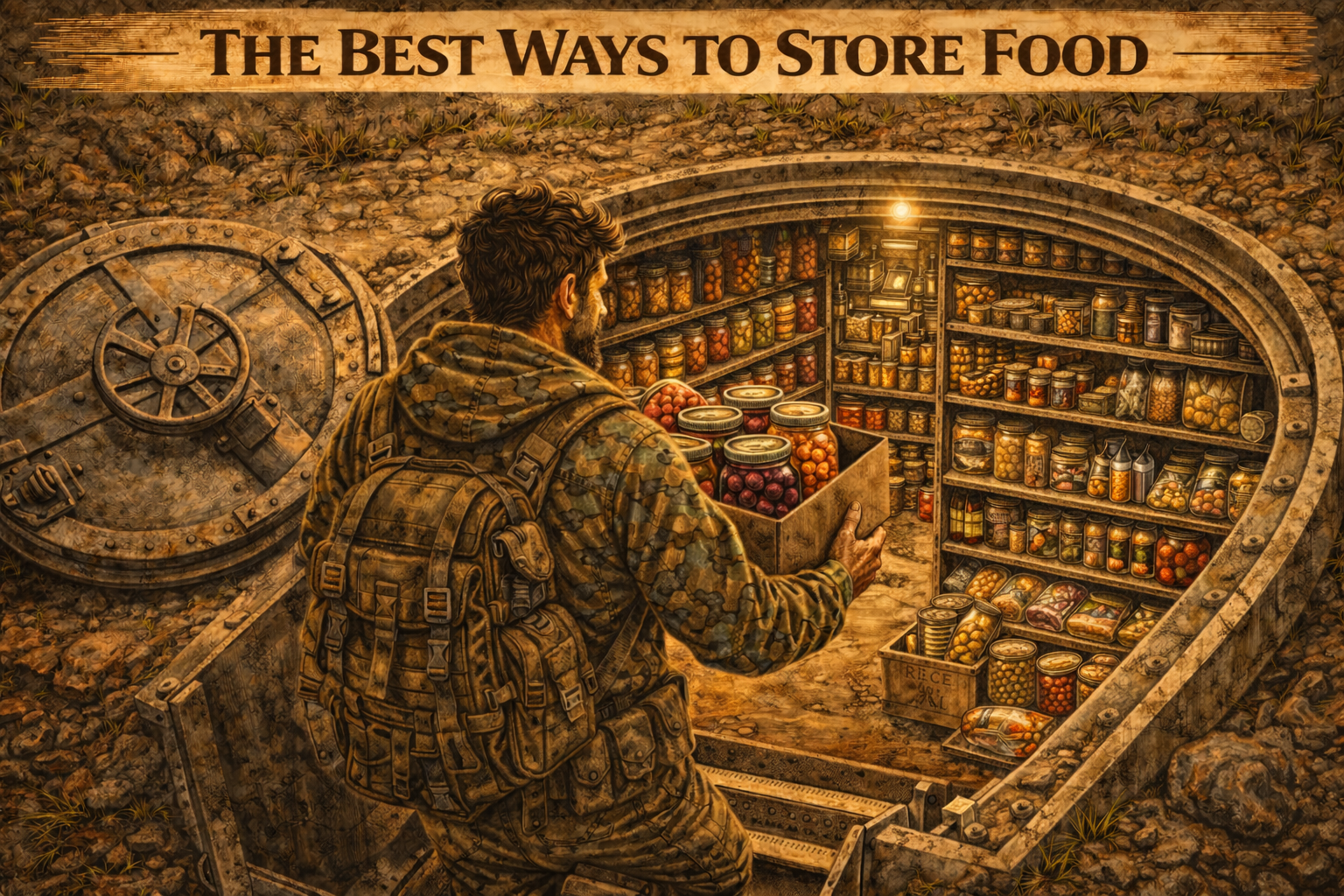
Food Storage: How To Start (and Actually Make It Work)
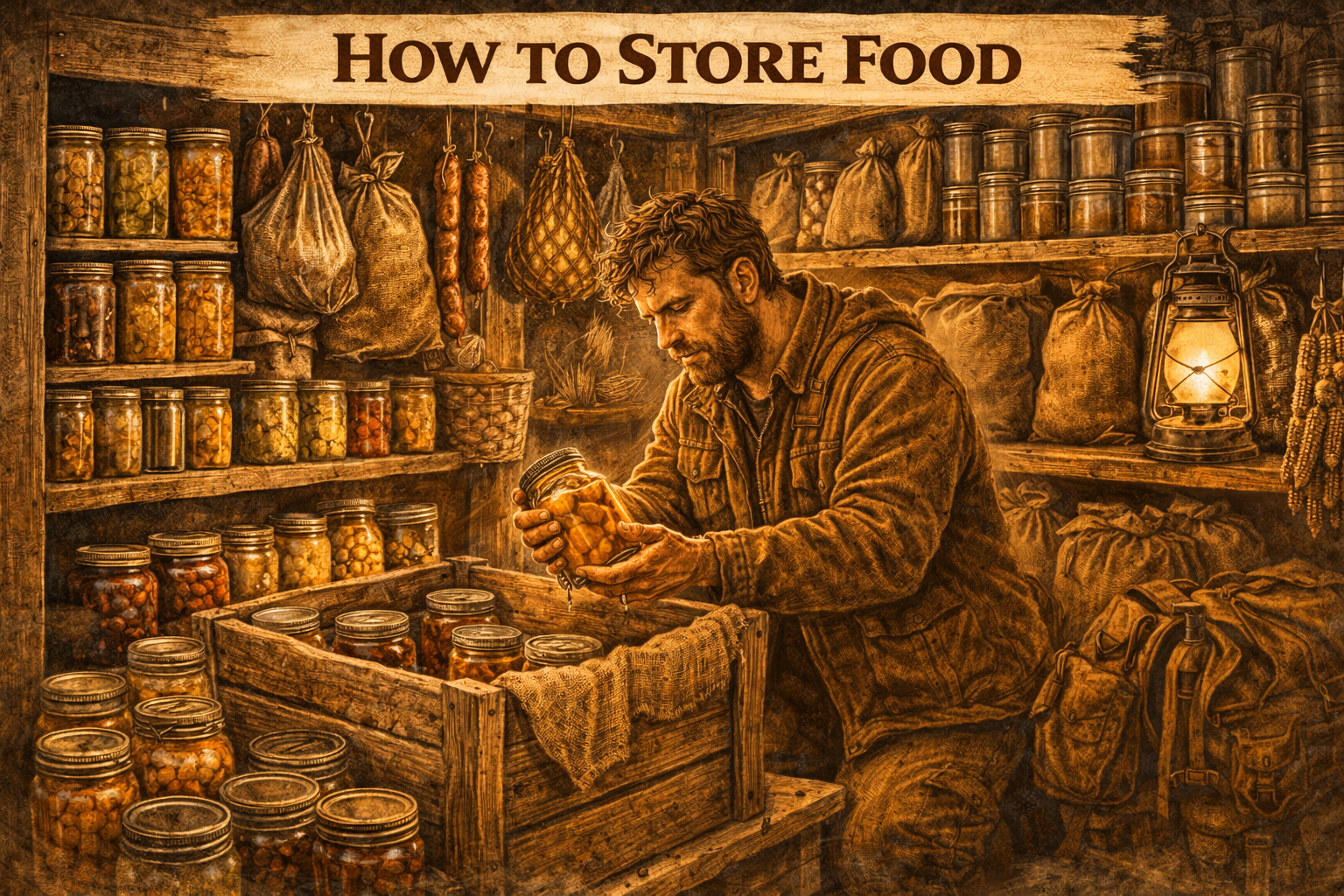
Food storage can feel overwhelming.
But like the old saying goes—you eat an elephant one bite at a time.
Here’s how to break it down and build it right.
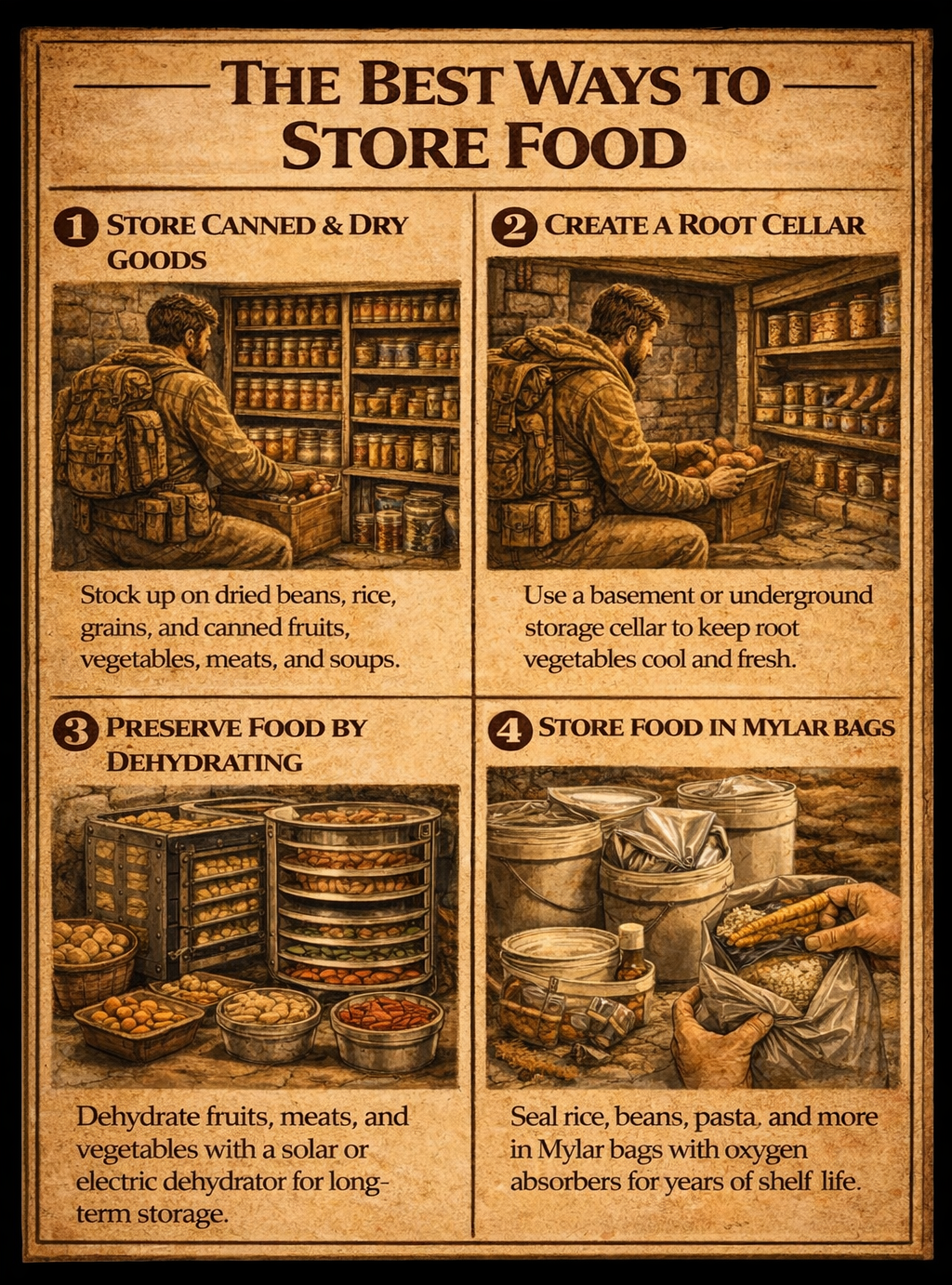
1. Store What You Actually Eat
Don’t buy things you think you “should” have.
Buy food your family already eats.
If you eat beans, buy a few extra cans
If you love bread, stock wheat
And if you stock wheat, also stock:
A grinder
Salt
Yeast
Oil
Then practice—go make bread from your storage now, not during a crisis.
2. Balance Is Key
Don’t just store carbs and packaged junk.
Too many preppers load up on rice, pasta, and cereal. That’s not enough.
Your body needs protein and fat, or you’ll get sick
During the Great Depression, people survived by canning meat—beef, mule, even dog
Canned meat (done right) tastes like pot roast and lasts for years
Store protein alongside your carbs—beans, canned meat, jerky, powdered eggs, etc.
3. Learn Basic Food Skills
Food storage without food skills is useless.
Learn how to make meals from scratch
Learn how to can, grind, bake, and cook without power
Practice now so you’re not learning under pressure later
If you’ve never made bread from scratch, start this week.
4. Build Slowly and Smart
Don’t try to do it all at once.
If you need 5 cans, buy 6 or 10
Each grocery trip, buy a little extra and stash it
Rotate your food—use and replace it in daily life
That’s how you test your system and find weaknesses
5. Prep for Power Loss
If your plan requires electricity or tools, make sure you also store:
A power source (solar, generator, manual backup)
Low-tech alternatives (manual grinders, camp stoves)
Tools are only as good as your ability to power and use them.
Bottom Line
Store what you already eat
Include protein, fat, and not just carbs
Get the tools and ingredients to make full meals
Practice using your storage before you need it
Build your stockpile one grocery trip at a time
Rotate and use your food to keep it fresh—and tested
If you can cook with your storage today, you'll survive with it tomorrow.

Here is my everyday survival knife
I”m giving it to you for a one time deal (see now above)^^^
Frequently Asked Questions:
-
Dry foods with low moisture usually last longest.
-
Heat shortens shelf life.
-
Yes, poor storage conditions still cause damage.
-
Not rotating older food first.
-
Light slowly reduces quality.