

Day 5: Using The ferro rod
Fear not.

The Ferro Rod: Modern Fire, Primitive Reliability
Not to be confused with flint and steel, the Ferro Rod is a firestarter made of ferrocerium and iron. It throws hot, blazing sparks—much hotter and more abundant than traditional steel sparks.
What Makes It Different
Ferrocerium ignites at 3,000–5,000°F
Creates a shower of sparks with minimal effort
More forgiving than flint and steel—ideal for beginners
Bonus: Magnesium Combo Kits
Many rods come with a magnesium block attached.
Here’s how to use it:
Scrape a small pile of magnesium into your tinder
Strike the Ferro Rod side to ignite the magnesium
Magnesium burns hot and fast—perfect for damp conditions
Pro Tip: Master Your Technique
Most people try to move the knife and aim sparks.
Don’t.
Instead:
Hold your blade steady, just above your tinder
Pull the Ferro Rod backward against the spine of the blade
This keeps your sparks focused and predictable
Now you can reliably ignite:
Shaved bark
Magnesium pile
Fluffed cambium
Dry grass or any natural tinder
Bottom Line
The Ferro Rod is one of the best fire tools on Earth.
Lightweight, low-fail, high-temp, and kid-friendly.
Learn the technique, trust the sparks.
Step By Step Ferro Rod Instruction Card…


vests are nice…
Heated, Tactical vests are better…
GRAB YOURS ABOVE
Ferro Rod Video Instruction…
Day 4: Creating A Bow Drill Fire
Who the Son sets free, is free.


EVERY SURVIVALIST NEEDS A MEDKIT…
I MADE ONE THAT YOU SHOULD TRAVEL ON THE GO WITH…
GRAB YOURS ABOVE.
Bow Drills
Bow drills seem tough at first—but with practice, they’re one of the most reliable friction fire methods.
Why Egyptian Style?
Works great with 550 cord, shoelaces, or shirt strings
Super adjustable and forgiving with modern materials
What You Need (5 Parts):
Bow – Green stick (thumb-thick, springy like willow)
String – Tied with tension-adjusting wraps
Spindle – Bone-dry and straight; think “banana cut straight”
Hearth board – Flat, dry wood about spindle thickness
Socket – Low-friction top (knife divot, stone, or wood)
Pro Tips:
Fire harden your bow after first use
Add green leaves or sap to the socket to reduce friction
Aim for high friction on the hearth board, low friction on the socket
Your spindle must roll smooth—like a marble on tile
Practice creates mastery—this is a skill no one can take from you
Bottom Line
Mastering bow drills gives you fire from nothing.
And like all true survival knowledge—it weighs nothing.
Step By Step Bow Drill Instruction Card…

Bow Drill Fire Creation Instruction Video…
Day 3: Creating A Hand Drill Fire
Be Kind Always.
Be Kind Always.
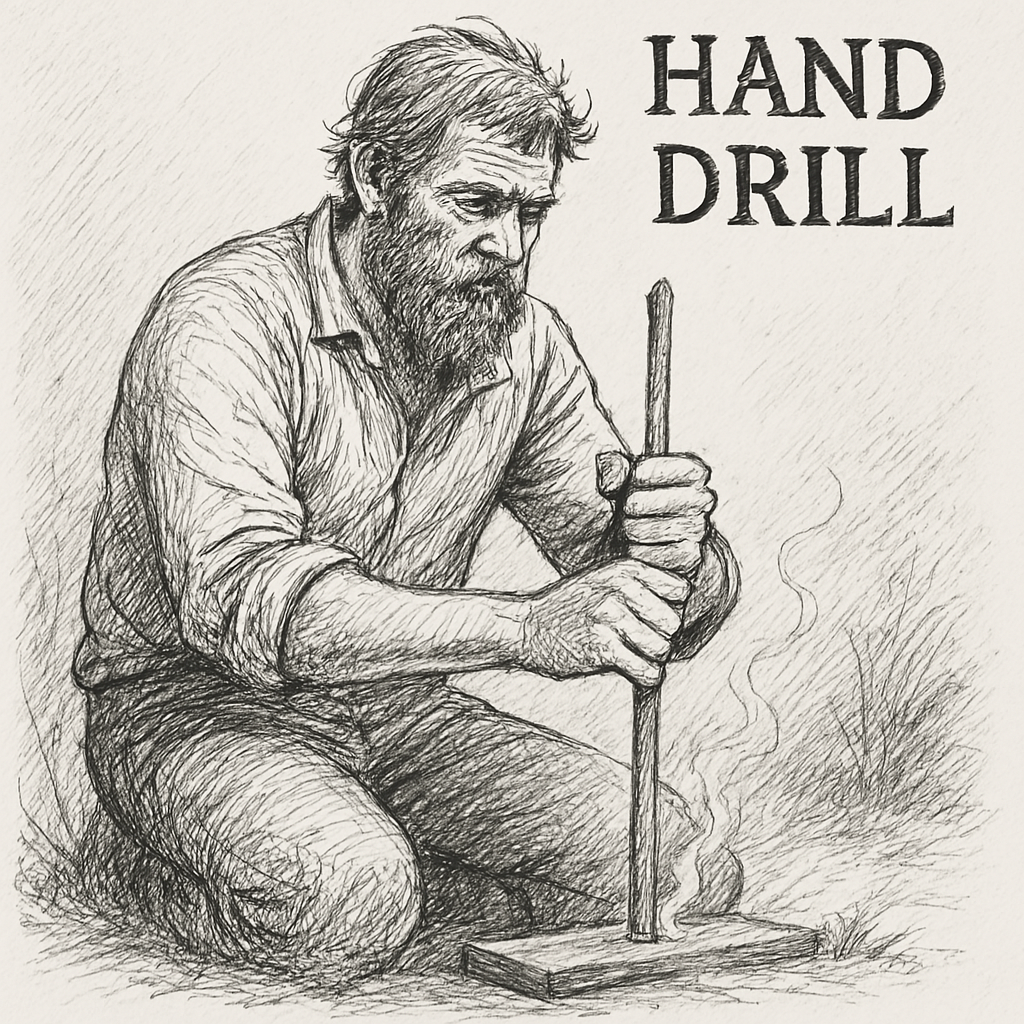
Hand Drill
The hand drill is the most primitive friction fire method—but it’s also the easiest to build.
Why Hand Drill?
Works with just two sticks
No cord, knife, or bow required
Perfect for no-gear survival scenarios
What You Need (2 Parts)
Spindle – Straight, dry stalk
Hearth Board – Dry, soft wood (cottonwood, willow, cedar)
Pro Tips
Use plant dust, shirt fabric, or ash to reduce hand friction
Spin slow to warm it up, fast to ignite
Cut a notch in your hearth board to catch the ember
Keep elbows on knees for stability and control
Bottom Line
Mastering the hand drill gives you fire with zero gear.
It’s tough—but it’s simple.
And like all survival knowledge—it weighs nothing.
Step By Step Hand Drill Fire Instruction Card…


I HATE SLEEPING ON THE COLD FLOOR IN THE WILD…
SO I MADE A PORTABLE SURVIVAL MATTRESS GRAB YOUS ABOVE.
Hand Drill Fire Creation Instruction Video…
DAY 2: FIRE SCIENCE LAws…
Always Learn.


MY DEFENSIVE FLASHLIGHT…
I’M PUTTING ON A MASSIVE DISCOUNT GRAB YOURS ABOVE.
Fire science: Fire science, why does it even matter? Have you ever watched a Boy Scout trying to light a green tree on fire with a lighter? After a few minutes they have a black stick, a halfway full Bic lighter and no fire. I have, why doesn't it work? Well, the answer is fire science.
So let's talk a little bit about it.
Fire Science
Fire isn’t magic—it’s a formula.
And if you don’t understand it, you’ll waste lighters, energy, and time.
The Fire Triangle
Every fire needs:
Heat – Sparks, friction, or flame
Fuel – Dry wood, tinder, gas
Oxygen – Airflow around the fire
Take away any one—and the fire dies.
What’s Actually Burning?
Fire burns gas, not wood
Heat turns wood into gas
The gas mixes with oxygen and creates the flame
That’s why flames hover just above the wood—not touching it
Why Fires Fail
Wet wood steals heat and kills ignition
No airflow? No fire—oxygen gets cut off
Too much wood on top? You suffocate the flame
Pro Tips
Build fires off the ground—oxygen flows better
Use a log cabin or teepee structure for air space
Only use dead, dry, finely processed wood
Bottom Line
Fire is science, not guesswork.
Understand the triangle, control the elements, and your fires will always light.
Day 1: Understanding Survival PRIORITIES
Stay Humble.


One of the most crucial survival priorities are survival knives grab the unbelievable voyager knife for a one time deal.
Survival Priorities
People ask, “What do I do if…?”
The answer: follow the Rule of Threes.
What Is the Rule of Threes?
A field-tested guideline that helps you focus on what kills you fastest—so you can survive anything.
Tyler’s Rule of Threes
3 Seconds Without Security
Gunfights average 3 seconds
Have a plan: firearm, blade, exit path, or location
Stay strapped or get clapped
3 Minutes Without Air
Drowning, smoke inhalation, airway blockage
Always carry survival gear on your person—not packed away
3 Hours Without Shelter (in harsh weather)
Hypothermia or heat stroke will kill fast
Your first shelter is your clothing—dress for survival
Then: sleeping bag > bivy > tent > natural shelter
3 Days Without Water
Depends on the environment
Water before food—always
3 Weeks Without Food
Hunger won’t kill you fast
You can survive on fat stores—prioritize shelter and water first
Don’t ration—binge and burn
3 Months Without Companionship
Isolation breaks the mind
Connection is survival too
Bottom Line
Gear matters.
Skills matter more.
But knowing what to do first is what keeps you alive.
Master your priorities—and go home and eat tacos.