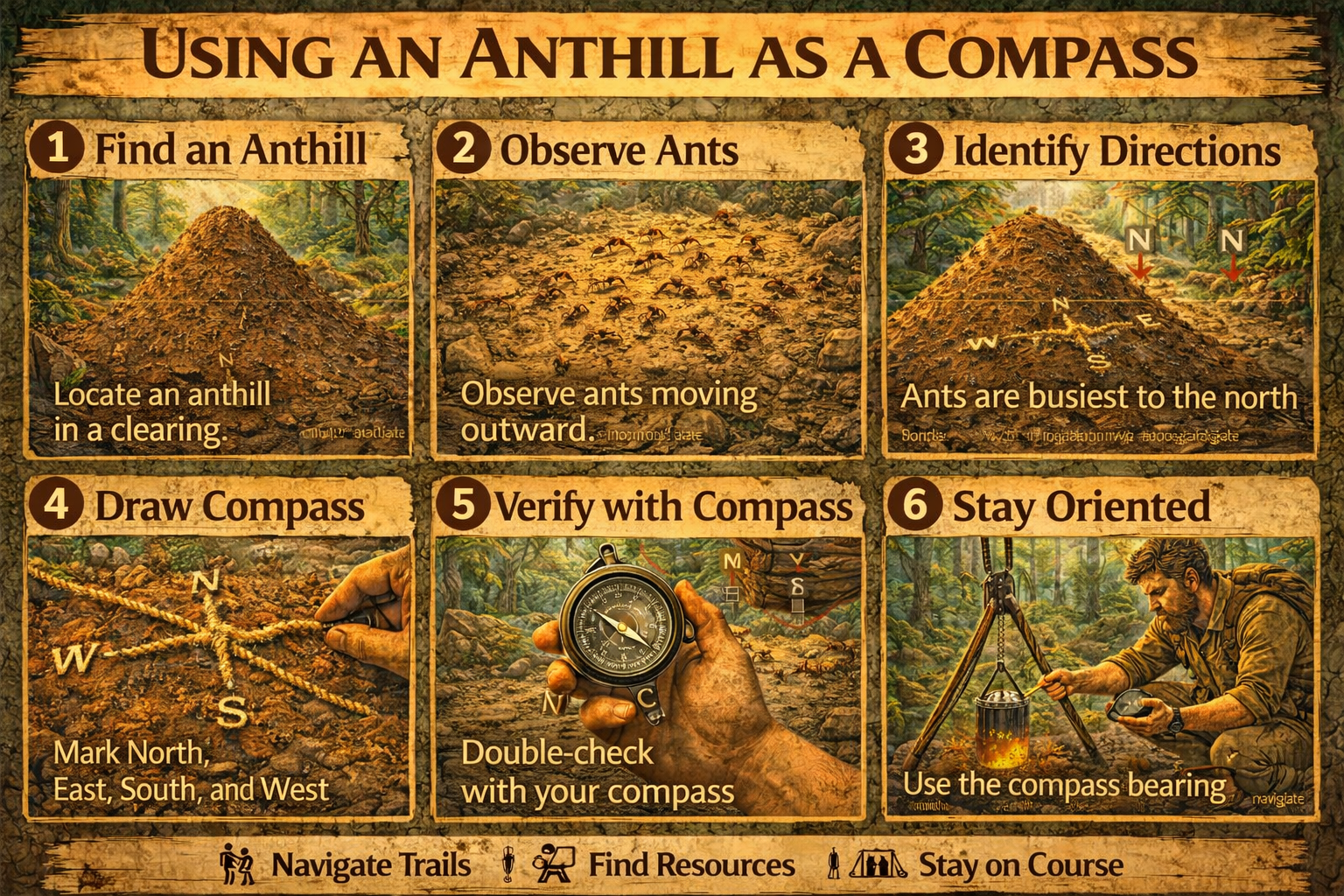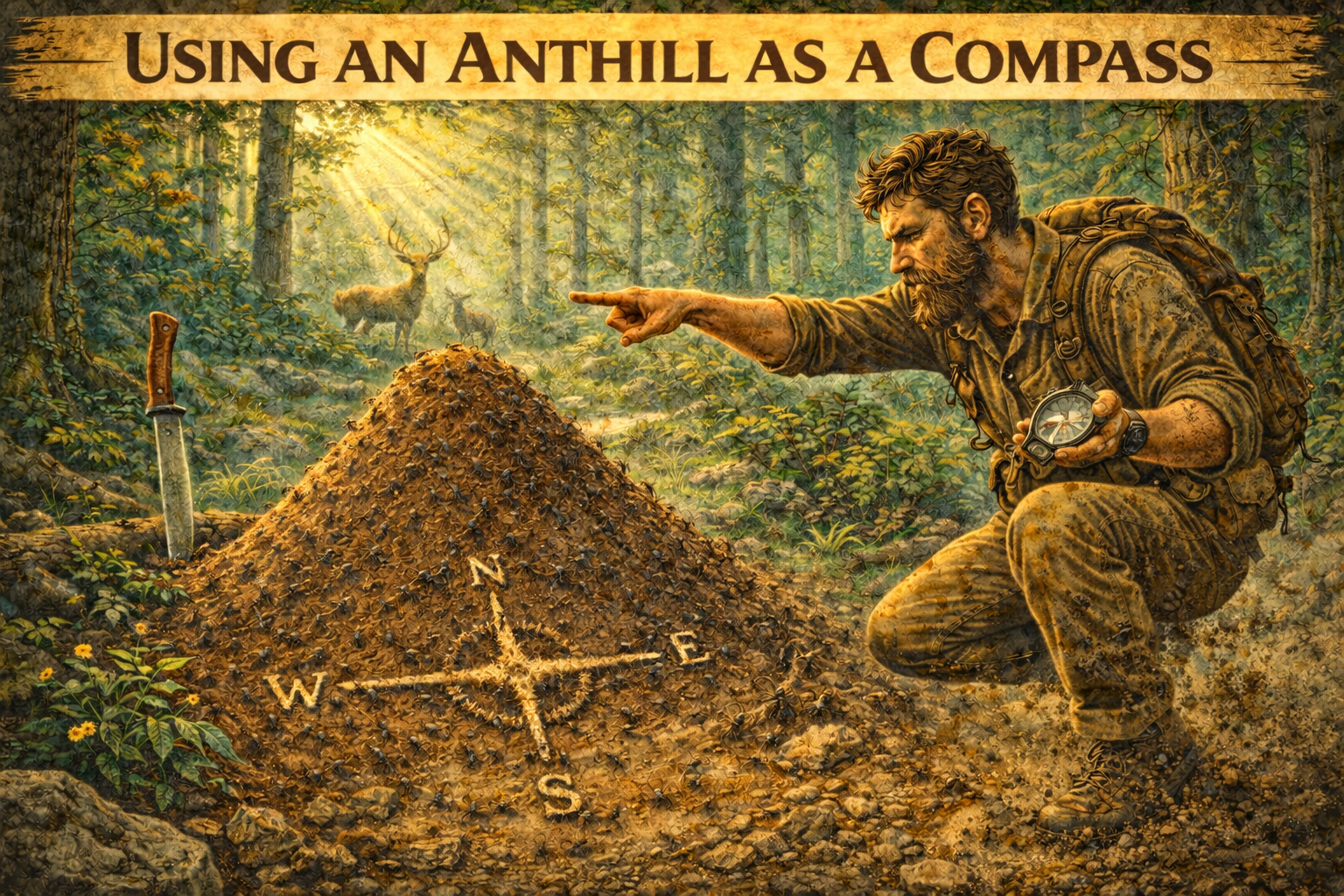
Finding North with an Ant Pile
It sounds like magic —but it’s pure environmental science.
Why It Works
Fire ants, like most animals, adapt to heat and wind in their environment.
In the Southwestern U.S., their mound entrances are built to:
Catch warmth in the cold morning
Avoid harsh sun in the hot afternoon
Shelter from prevailing west-to-east winds
Result:
Most entrances face South to Southeast
How to Use It
Find several undisturbed ant piles
Avoid ones damaged by cars, animals, or shaded by cliffs/trees
Observe the direction of the entrance holes
Average the direction—most will point South/Southeast
Use that to find North (opposite direction)
Why This Matters
If you got lost heading north, and all the ant piles face southeast,
you now know how to backtrack south—even without a compass.
Bottom Line
Nature leaves clues
Ants know where the sun rises.
You just have to notice.

Here is a flashlight I made that I believe every survivalist should have…
I put it on a massive discount so i could put it in more peoples hands grab now (click above)
Frequently Asked Questions:
-
In some regions anthill shape can suggest sun exposure.
-
Natural signs vary by location.
-
The sunnier side may appear broader.
-
Assuming every anthill follows the same pattern.
-
When combined with other navigation clues.