Skill: Follow Animals by What They Leave Behind
Tracking animals helps you find food or stay away from danger. You don’t need gear — just your eyes and a little patience.
Why It Matters
Helps you find animals to hunt
Keeps you safe from predators
Shows you where animals go
Helps you learn the land
How to Do It
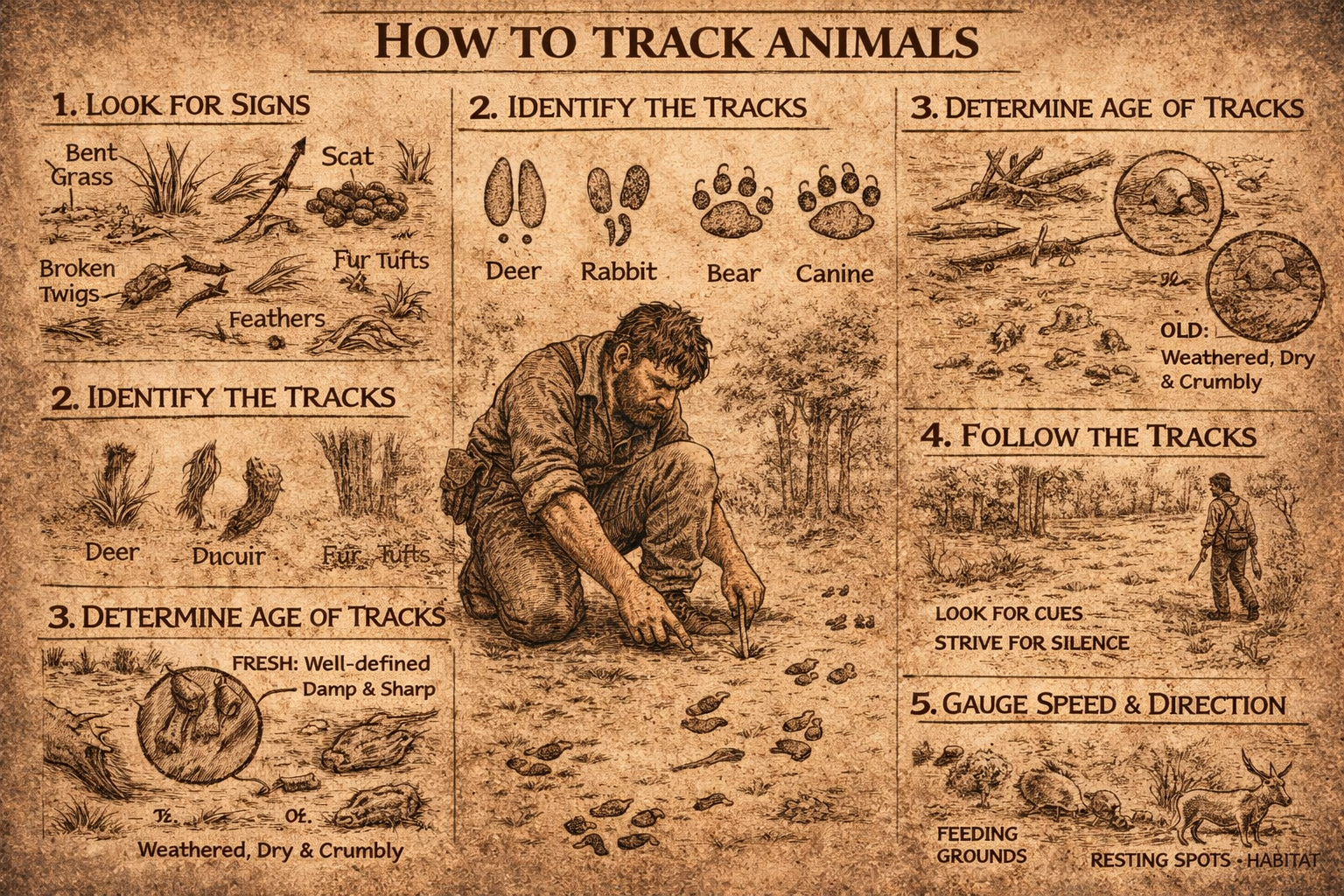
1. Look for Footprints
Animals leave tracks in mud, dirt, sand, or snow.
Each animal has its own shape.
Deer tracks look like a heart
Bears have wide feet with 5 toes and claw marks
Coyotes or wolves have 4 toes and claws
Mountain lions have round prints with no claws showing
2. Find dung (Animal Poop)
Yes, poop matters.
Meat-eaters leave dark poop with fur or bones
Plant-eaters leave lighter poop with grass or leaves
3. Look Around You
Bent grass or broken branches show where an animal walked
Smooth paths in the dirt mean animals come through often
4. Look for Food Signs
Bitten leaves, dug-up roots, or scratched trees mean an animal ate there
5. Check How Fresh the Sign Is
Sharp, clean tracks = recent
Blurry or filled-in tracks = old
Wet poop = recent
Dry poop = old
Tips
Walk slowly and stay quiet
Look for tracks early in the morning
Always look where the animal might be going
Bottom Line
Animals leave clues. If you can follow them, you’ll find food or stay safe. Tracking is one of the best survival skills there is.

Frequently Asked Questions:
-
Tracks in soft ground, broken vegetation, and fresh droppings are usually the clearest signs.
-
Soft soil, mud, or sand holds clearer impressions than dry hard ground.
-
Yes, rain and wind can remove signs within hours.
-
They focus only on footprints and ignore surrounding disturbances.
-
Early morning often reveals the freshest movement.