How to Start a Fire in the Rain: Skill 53
Skill: Lighting a Fire When Everything’s Wet
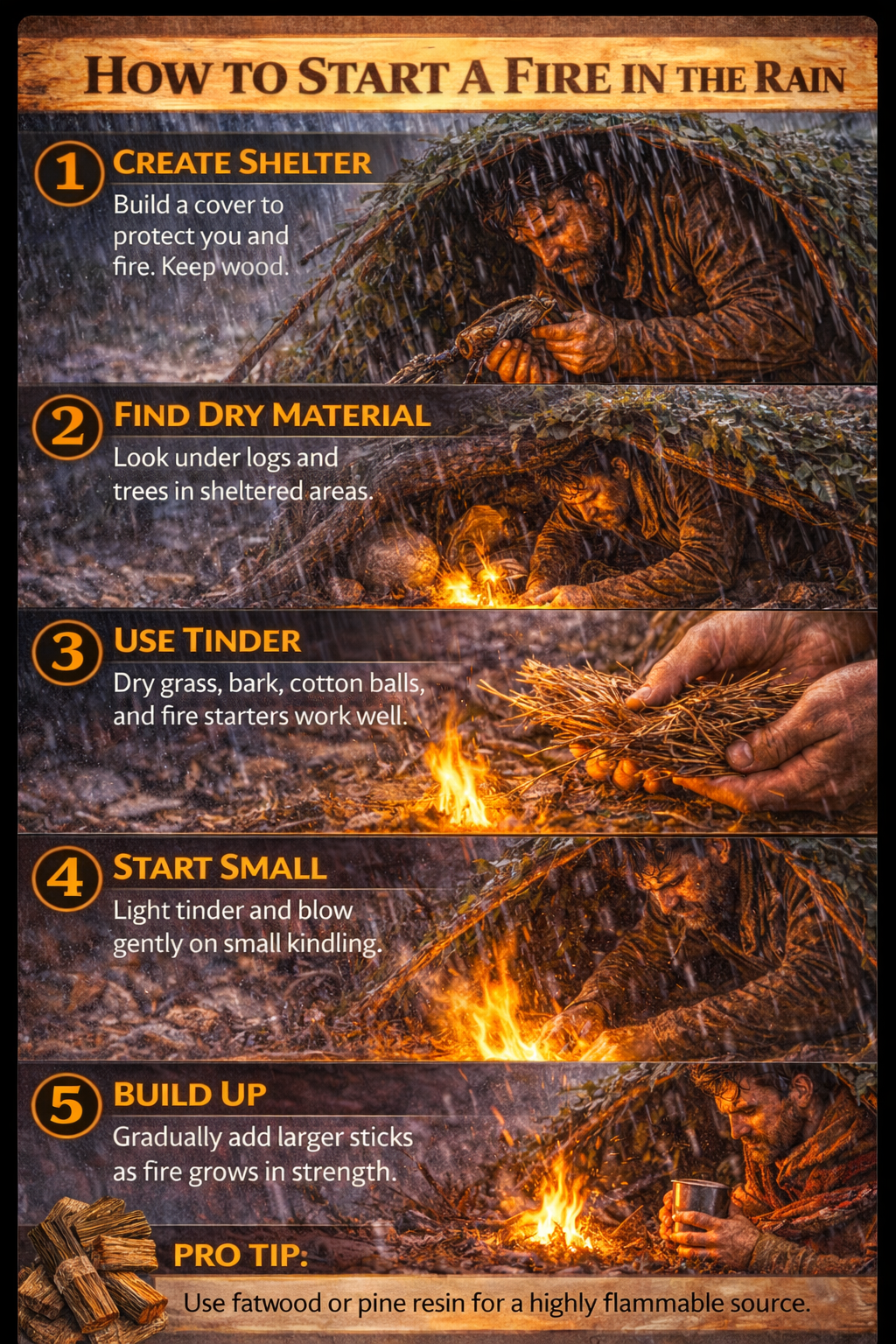
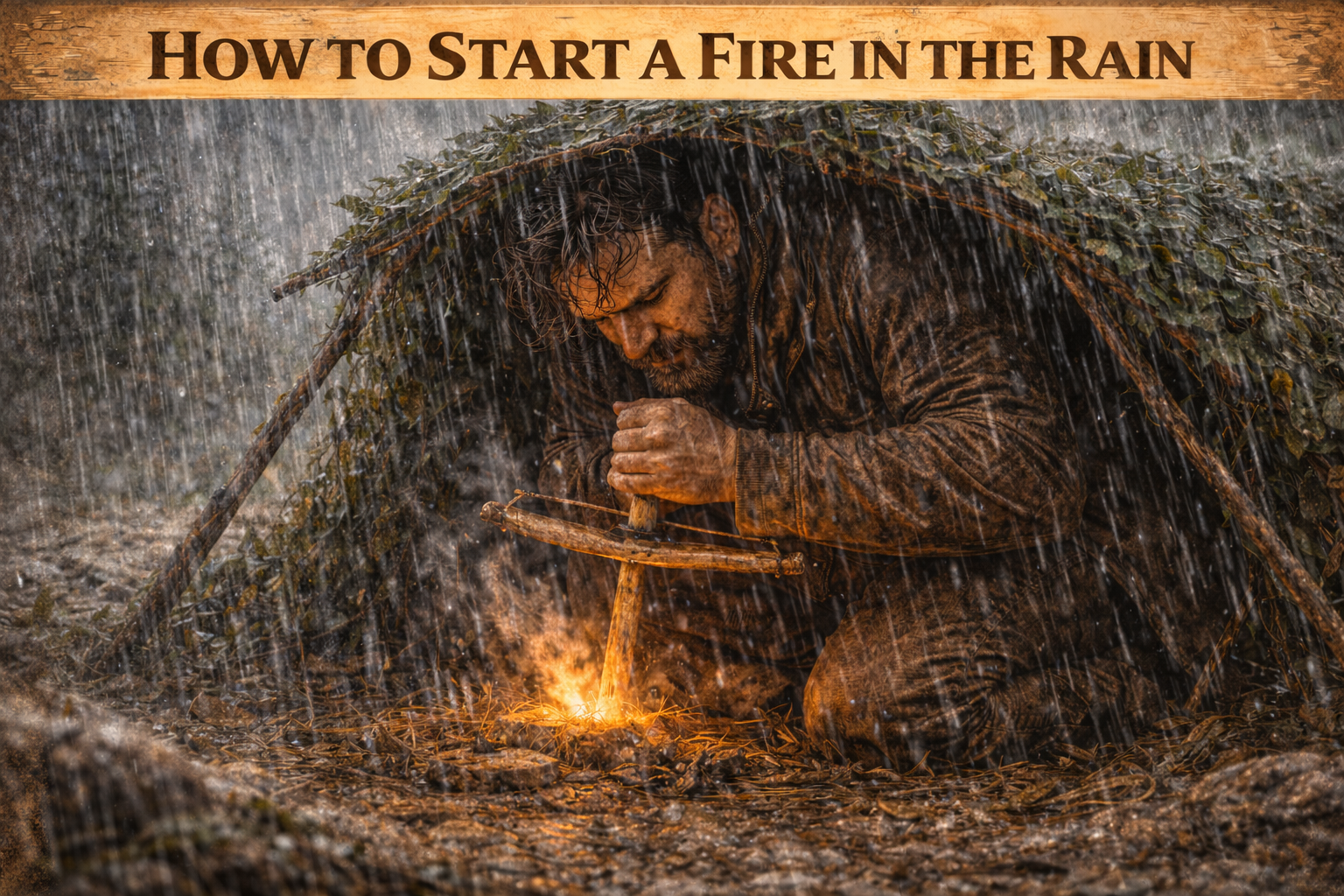
Rain makes fire-starting hard — but not impossible. You just need the right method, the right materials, and the mindset to make it happen.
What It Does
Gives you heat and light in cold, wet weather
Helps dry clothes and gear
Boosts morale and keeps predators away
How to Do It
1. Find Dry Tinder
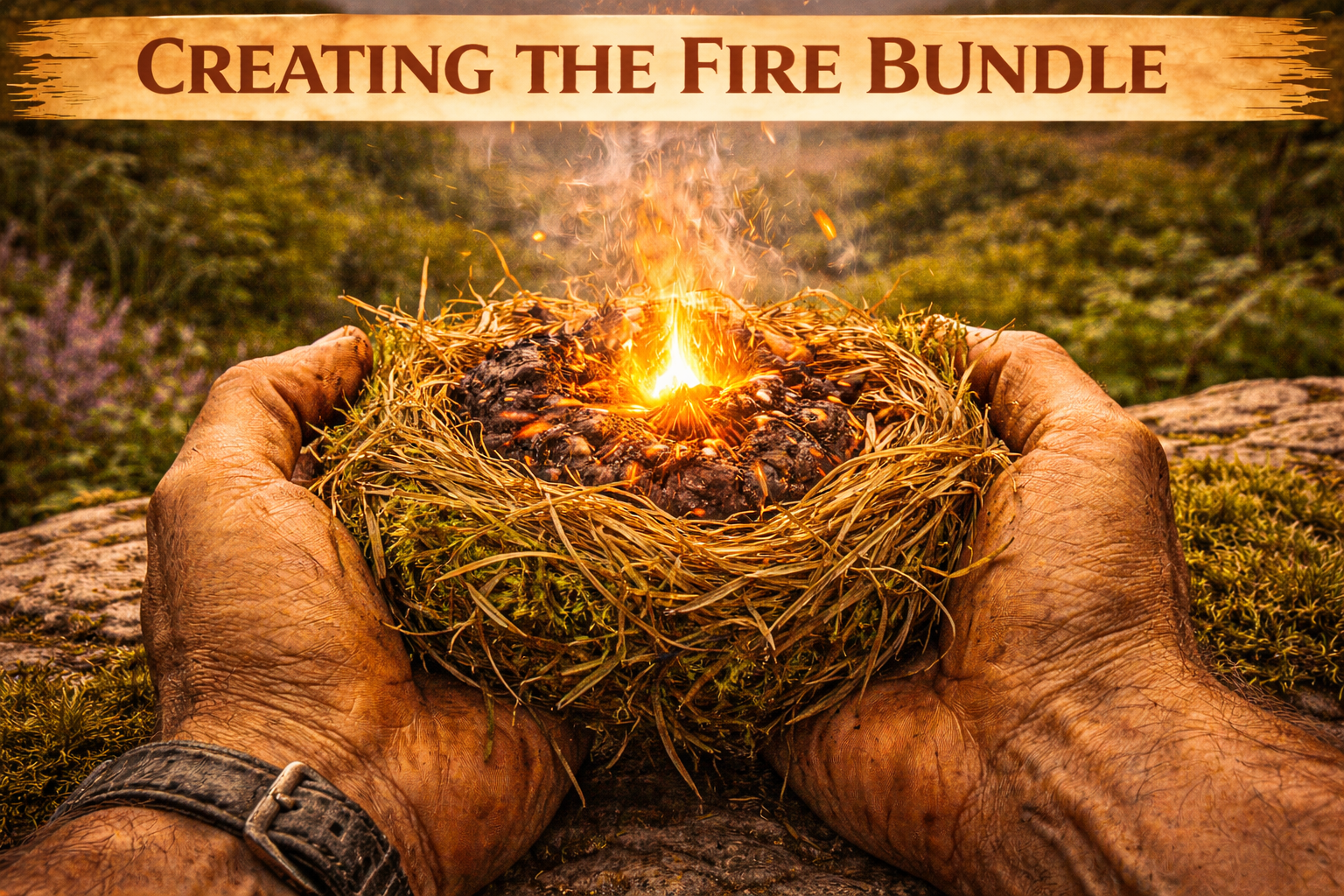
Look under logs, tree bark, or deep inside your pack. Great options:
Birch bark
Fatwood (pine resin sticks)
Cotton balls with petroleum jelly
Dry grass or dryer lint (if packed)
2. Use a Wind Block
Find cover: a fallen tree, big rock, or tarp. Keep the rain and wind off your fire base.
3. Build a Platform
Lay down a base of bark or sticks to lift your fire off the wet ground.
4. Split the Wood
Even wet logs have dry cores. Use your knife or hatchet to split them and take the inside.
5. Start Small, Go Up
Light your dry tinder first. Then add pencil-thin sticks, then thumb-thick, then wrist-thick wood.
6. Add a Firestarter (If You Have One)
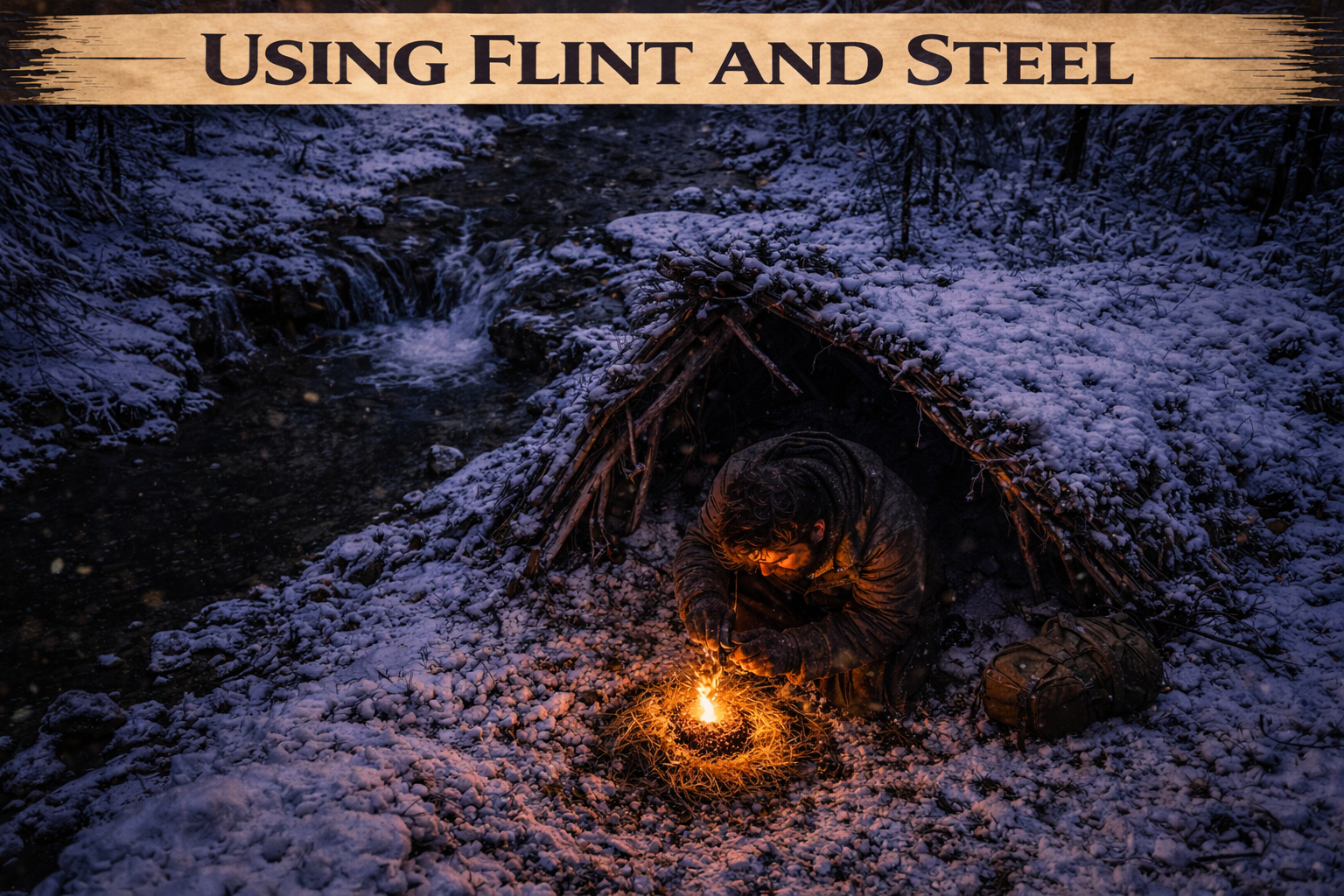
Ferro rod, waterproof matches, or a lighter — even in rain, they work with dry tinder.
Tips
Look for dead branches up off the ground — usually drier
Pine and cedar trees are gold mines for fire material
Keep your fire small and close — easier to shield from rain
Bottom Line
Rain doesn’t mean no fire. With the right prep and dry core wood, you can light a fire, stay warm, and stay alive.
Build smart. Burn hot. Stay dry.

Frequently Asked Questions:
-
Dry inner tinder is the key.
-
Inside bark, dead standing wood, or protected pockets.
-
Rain quickly kills early flame.
-
Yes, if split to expose dry inner wood.
-
Using large fuel too early.